


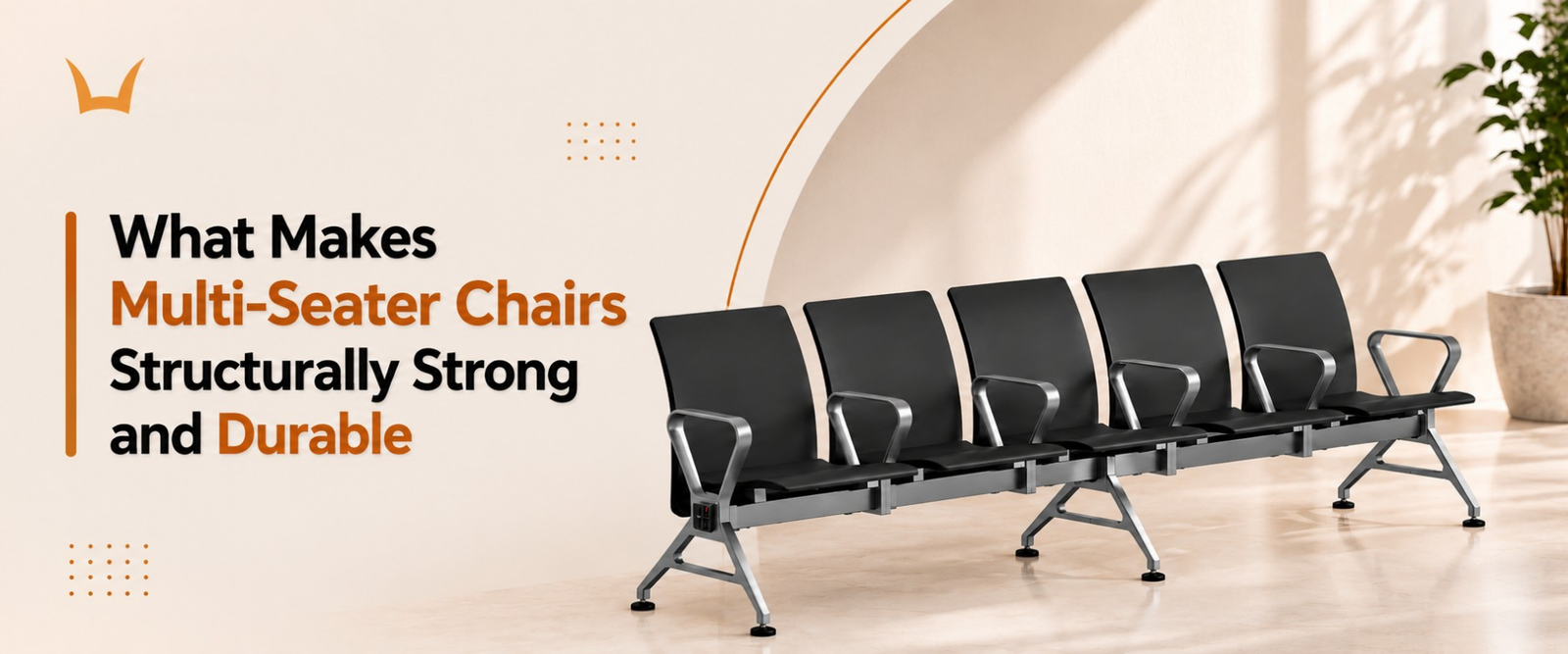
What Makes Multi-Seater Chairs Structurally Strong and Durable
- The Backbone Decides Everything
- Materials That Decide Real Strength
- The Engineering That Keeps It Standing
- Where Cheap Multi-Seater Chairs Break First
- How to Spot a Truly Durable Multi-Seater Chair
TLDR
- One strong beam holds it all
- Smart joints share heavy loads
- Right material, longer life
- Tested for real public use
- Built once, lasts for years
Introduction
Public chairs do not get a break. They are sat on, leaned on, and tugged at all day long. Most chairs give up within a year. A few keep going for a decade. The difference is not luck. It is design.
Multi-seater chairs that survive heavy public use are not built like normal chairs. They are built like bridges. Strong spine. Strong joints. Strong feet. Every part has a job.
This blog breaks down what really makes these chairs tough enough to last.
The Backbone Decides Everything
Every multi-seater chair has a long horizontal beam. That beam is the spine. If the spine is weak, nothing else matters.
The beam holds every seat. It takes every push, pull, bounce, and sit. When users shift weight, the beam absorbs it. When kids jump on a seat, the beam takes the hit.
A solid beam stays straight for years. A cheap one bends, sags, or twists. Once the beam goes, the whole chair is finished. So the first rule is simple. Look at the beam first. Always. A well-designed beam also improves space efficiency by supporting multiple seats through one shared structure.
Materials That Decide Real Strength
Frame Materials and Their Role
Heavy-duty mild steel is widely used in commercial and institutional seating because of its strength, durability, and ability to handle continuous daily use. Its robust construction helps maintain structural stability even in demanding environments with frequent movement and heavy usage. For environments exposed to moisture or humid conditions, stainless steel offers additional corrosion resistance and long-term protection against rust.
Thickness matters more than people realise. Thin metal looks the same on the outside but folds under real use. A heavier chair is often a smarter buy.
Seat and Back Materials
Seats face direct human pressure every minute. Strong polypropylene plastic flexes a little, then bounces back. That tiny give is what keeps the seat from cracking.
Cushioned seats need quality foam and tough fabric. Cheap padding flattens fast. Cheap fabric tears at the edges within months.
Surface Coating and Finishing
A high-quality coating helps protect the chair surface from everyday wear, scratches, and regular usage damage. Powder coating creates a strong and durable finish over the metal surface, improving resistance to chips, scratches, and the daily impact associated with public and commercial environments.
Under the coating, anti rust treatment quietly does its job. No one sees it. But it stops the chair from dying from the inside out.
The Engineering That Keeps It Standing
Joints That Refuse to Wobble
Joints are where most chairs lose the fight. A weak weld today becomes a wobbly seat next month and a broken bracket next year.
Strong welds are clean, even, and thick. No gaps. No rough edges. Bolted joints use heavy fasteners that grip tight and stay tight.
Pay extra attention to where the seat meets the beam. That connection takes the most stress. If it feels loose when you press down, walk away. Proper load balancing across the frame also plays a major role in keeping stress from building at these connection points.
A Base That Holds Its Ground
The base plays an important role in maintaining chair stability and balance. Wide and well-designed feet help keep the unit steady, while proper weight distribution improves support even on slightly uneven flooring surfaces.
Rubber pads or floor glides protect both the chair and the floor. They absorb vibration, kill noise, and stop scratches. Small details. Big difference.
Built to Take Real Public Use
A chair that survives a showroom test may still fail in a real lobby. Real strength shows up under repeated stress, not under one strong push.
Quality makers run fatigue tests, impact tests, and load cycle tests. The chair is sat on, banged into, and stressed thousands of times before it ships. That is the kind of testing that earns trust.
Where Cheap Multi-Seater Chairs Break First
Cheap chairs are not just lower in price. They are lower in life span. And the failure points are always the same.
Thin steel frames bow under daily weight. Welds crack at the seat brackets. Bolts work their way loose because no one tightened them properly. Paint chips. Rust spreads. Plastic snaps right where it meets the metal.
The worst part is that none of this shows in the first month. The chair looks fine when it arrives. Six months later, it starts complaining. A year later, it is on the way to the scrap yard.
This is why the cheapest chair is often the most expensive in the long run. Spaces like hospitals and clinics that run all day cannot afford this cycle, which is why most rely on hospital seating suppliers who build specifically for that level of daily demand.
How to Spot a Truly Durable Multi-Seater Chair
Skip the brochure. Use your hands and eyes.
Press the seat hard. A strong chair holds firm. A weak one bends or creaks.
Lift one end of the unit. A solid beam stays straight. A weak beam flexes too much.
Run your hand along the welds. Smooth and even is good. Rough or patchy is bad.
Look under the seat. Quality brackets are thick, clean, and tightly bolted. Cheap brackets look thin and rushed.
Check the finish. Powder coating should feel smooth all over. Drips, thin patches, or rough spots tell you the rest of the chair was rushed too.
Ask for the test reports. A maker who has truly tested their chairs will share the data without hesitation. If they hesitate, that is your answer.
And finally, look at the warranty. A short warranty says the maker is unsure. A long warranty says they trust their work.
Conclusion
A strong multi-seater chair is not magic. It is the result of good steel, smart joints, solid bases, and honest testing. Skip any of these and you get a chair that breaks before it earns its keep.
The right chair pays for itself many times over. It serves quietly, day after day, with no drama and no breakdowns. That is the chair worth choosing.
Tired of chairs that fail before they finish their first year?
Tired of chairs that fail before they finish their first year? Syona Roots makes multi-seater chairs that are built like they should be. Thick steel beams. Tight welded joints. Tough finishes that stand up to real use. No shortcuts. No surprises. Public furniture has one job: survive humans repeatedly treating it like gym equipment, luggage racks, and occasionally emotional support objects.
Explore durable multi-seater chair solutions at Syona Roots designed for waiting areas, institutions, auditoriums, healthcare spaces, and other demanding commercial environments.