


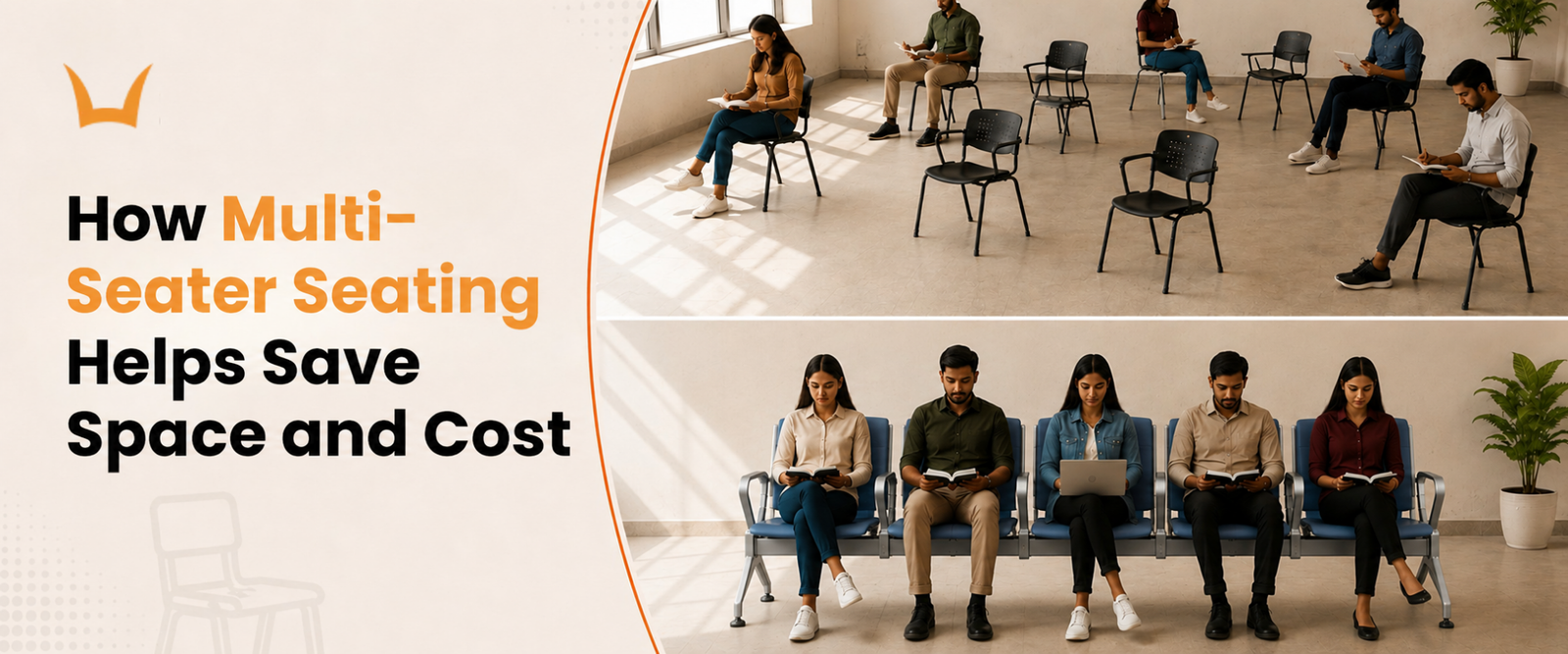
How Multi-Seater Seating Helps Save Space and Cost
- The Real Space Problem in Modern Venues
- How Multi-Seater Seating Saves Floor Space
- The Cost Savings Behind Multi-Seater Seating
- Hidden Savings Most Buyers Miss
- Where Multi-Seater Seating Saves the Most
TLDR
- Shared frame design uses less floor area
- Saves real money long term
- Fewer individual units, faster arrangement
- Same hall, more uses
- Smarter buy for any venue
Introduction
Space and money are two things every venue runs short of. Halls fill up. Storage rooms overflow. Furniture costs keep climbing. Yet the seating choice you make can quietly fix all three problems.
Multi-seater seating is built with this exact challenge in mind. It does more than just hold people. A shared frame across multiple seats means fewer individual units on your floor, lower material cost per seat, and a cleaner, more organised layout that is easier to manage.
In this blog, we look at how this single seating choice helps you do more with less.
The Real Space Problem in Modern Venues
Modern venues face a tough mix of demands. They host events of all sizes. They need flexibility to switch between layouts. They also need to manage furniture without losing usable floor space.
Most halls are not built with growing seating needs in mind. When individual chairs are used, each one occupies its own footprint with its own legs spread across the floor. At scale, the combined floor coverage of all those individual legs and bases becomes a real constraint on layout and capacity.
This is where seating type starts to matter. The wrong choice fills your venue with individual units that take up more combined floor area. The right choice uses a shared frame to seat more people with a smaller total footprint.
How Multi-Seater Seating Saves Floor Space
Shared Frame Means Fewer Legs on the Floor
A key advantage of multi-seater chairs is the shared frame design. Instead of every seat having its own legs, a row of seats shares a single continuous frame with support only at the ends. This removes several floor contact points, freeing up surface area that would otherwise be consumed by individual chair legs.
In any large hall, the difference in floor coverage between individual chairs and linked multi-seater units is immediately visible. The shared frame design creates cleaner rows with more open floor space between and around them.
Cleaner Row Layouts, Better Use of Hall Width
Multi-seater units naturally align into straight, even rows. This makes it easier to plan aisles, walkways, and emergency exits without wasting space. Individual chairs, even when carefully arranged, tend to shift over time, creating uneven gaps that eat into usable seating area.
When rows stay aligned, venue managers can fit more seating into the same hall width while still meeting safety clearance requirements. The disciplined layout of linked seating turns floor planning into a more precise and efficient exercise.
Multi-Use of the Same Hall
A hall with well-placed multi-seater rows becomes more predictable to configure. The same space can host a conference in the morning and a banquet-style event in the evening because the seating layout is fixed and organised. Staff know exactly what each row holds and how the layout maps to the room.
This predictability means one hall does the work of two or three when event types vary. Total floor space requirements stay the same, but the venue gets more mileage from it.
The Cost Savings Behind Multi-Seater Seating
Lower Cost Per Seat
Because multiple seats share a single frame, the material cost per seat is lower than buying individual chairs of comparable quality. You are not paying for a full set of legs and structural components for every seat. The frame cost is distributed across two, three, four, or more seats, depending on the unit size.
For venues furnishing a large hall, this cost difference adds up quickly. Fewer total units means less packaging, less handling, and a simpler installation process — all of which reduce the overall cost of outfitting a space.
Reduced Handling and Installation Cost
Setting up a venue with multi-seater units takes less effort than placing individual chairs. One unit covers multiple positions at once. Staff spend less time positioning, adjusting, and aligning seats before an event begins.
Over time, this reduces labour cost significantly. Large venues that host frequent events feel this saving most clearly. Fewer items to handle per event means the same team can manage more bookings within the same working hours.
Longer Lifespan, Lower Replacement Cost
Multi-seater chairs are designed for high-traffic, demanding environments. Shared frames are built from heavy-duty materials with reinforced joints. Because the structural load is distributed across the entire linked frame rather than concentrated in individual legs, each unit typically shows less wear over time.
This long service life brings down the total cost per use considerably. A unit that holds up well under consistent heavy use offers far better value than individual chairs that wear out sooner under the same conditions. This is one reason why many public spaces prefer linked seating over standalone chairs for long-term daily use.
Hidden Savings Most Buyers Miss
Many buyers focus only on the upfront price. But the real savings come from areas they often overlook.
Faster Cleaning, Lower Daily Effort
With multi-seater rows, staff cover larger seating areas with fewer individual units to move or lift. The shared frame keeps seats in a fixed line, making floor cleaning under and around rows faster and more consistent.
Less Floor Damage Over Time
Individual chairs shift, scratch, and dent floor surfaces over years of use. Fixed multi-seater frames stay in position, reducing the abrasive contact points that cause surface damage. Floor repair and refinishing budgets stay lower for longer.
Simpler Maintenance Rounds
A shared frame has fewer independent joints and contact points to check and tighten. Each inspection covers an entire linked row rather than a series of standalone chairs, so maintenance rounds take less time. Well-engineered frames also improve the long-term structural durability of the seating system under continuous public use.
Better Airflow and Cooling Efficiency
Organised, fixed row layouts create more predictable pathways for air circulation than scattered individual seating. Over a full year of operation, this can contribute to a modest reduction in energy usage.
Where Multi-Seater Seating Saves the Most
Some venues benefit more from multi-seater seating than others. Here is where the impact is most clearly felt.
Banquet Halls and Event Centres
Banquet halls and event centres that run back-to-back functions gain from faster configuration and more predictable row layouts. Fixed seating rows keep the hall organised between events without requiring staff to realign individual chairs.
Hotels with Conference and Meeting Rooms
Linked seating fills rows efficiently and holds its arrangement through multiple events. Each booking starts on time without layout adjustments eating into setup time.
Religious Centres and Community Halls
Religious centres and community halls that handle large regular gatherings benefit from the durability and floor coverage efficiency of shared-frame seating. The lower cost per seat is especially valuable when furnishing large capacities on a fixed budget.
Educational Institutes and Auditoriums
Auditoriums and seminar halls benefit by getting a cleaner, more manageable seating arrangement. Rows stay aligned across semesters without constant readjustment, and the reduced floor footprint compared to individual chairs means more usable aisle space.
Clinics, Lounges, and Small Offices
Even smaller venues such as clinics, waiting lounges, and community offices see a real benefit. A linked multi-seater unit takes up less total floor space than the same number of individual chairs and gives the room a cleaner, more professional appearance. This is especially useful in healthcare waiting areas where organised hospital visitor seating helps manage patient flow more efficiently throughout the day.
Conclusion
Multi-seater seating is more than just a furniture choice. It is a smart way to handle two of the toughest venue challenges: space and cost.
By using a shared frame across multiple seats, these chairs reduce the total floor footprint, lower the cost per seat, cut installation and maintenance effort, and deliver lasting durability under heavy daily use. Venues using them benefit from cleaner layouts, faster arrangement, and meaningful savings over time.
For any owner thinking long term, multi-seater seating is a clear win.
Designed for high-traffic spaces, Syona multi-seater chairs support comfortable and efficient seating layouts.
Smarter Multi-Seater Seating for High Traffic Venues
The right seating arrangement can help venues improve organisation, maximise floor space, and reduce long term operational costs. Multi-seater seating offers a practical solution for high traffic environments by combining durability, efficient layouts, and lower maintenance needs in one smart design. Humans eventually discovered that connecting chairs together prevents them from drifting around halls like confused livestock. A genuine breakthrough in civilisation.
Explore durable and space efficient multi-seater seating solutions at Syona Roots designed for banquet halls, auditoriums, waiting areas, educational institutions, and other high traffic public spaces.