


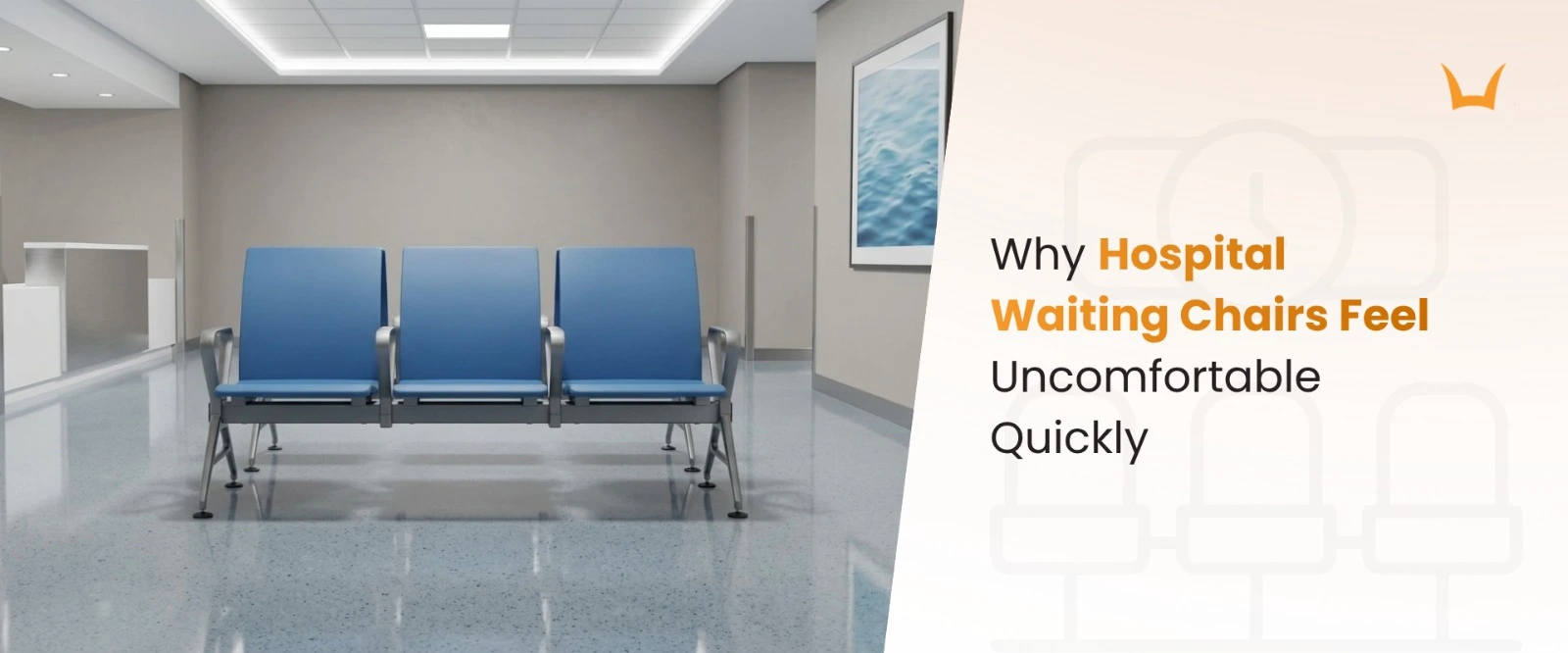
Why Hospital Waiting Chairs Feel Uncomfortable Quickly
- People in Hospital Waiting Areas Are Already Under Physical Stress
- The Attendant Waits Longer Than Anyone Plans For
- Patients Sit Down and Stand Up Many Times During One Visit
- The Waiting Area Is What Most Patients Remember About the Visit
- Syona Waiting Chairs for Healthcare Environments
- The Waiting Chair Is Part of the Care Environment
Why Are Hospital Chairs So Uncomfortable? Real Causes
For hospital administrators, facility managers and healthcare infrastructure planners
Hospital waiting areas are not like other public spaces. The people in those chairs are worried, unwell, physically drained or sitting beside someone who is. That alone changes how a chair feels within the first twenty minutes.
Most hospitals choose waiting chairs the same way they choose any other furniture. Durability, price, easy maintenance. These matter. But they leave out the most important question: who is actually sitting in these chairs, and what are they going through?
So why are hospital chairs so uncomfortable so quickly? The answer has more to do with who is sitting in them than how they are built.
People in Hospital Waiting Areas Are Already Under Physical Stress
When someone is anxious, the body responds physically. Muscles tighten, especially across the shoulders and back. The body becomes more sensitive to pressure and discomfort. A person in that state is not passively waiting. They are physically tense before they even sit down.
Even a decent chair feels uncomfortable faster when the user is already tense. Pressure under the thighs registers sooner. The absence of back support is felt more sharply. Twenty minutes in, the discomfort is already difficult to manage.
Hospital waiting is almost never calm waiting. It involves fear about diagnoses, worry about a family member, uncertainty about what comes next. A chair that ignores this reality will fail its users quickly.
Choosing hospital waiting room chairs without considering the emotional and physical state of the people using them is where most procurement decisions go wrong.
Patient comfort seating starts with understanding this physical state, not just chair specifications.
The Attendant Waits Longer Than Anyone Plans For
Hospital seating is usually evaluated around patient use. The assumption is that a patient waits, gets called and leaves. What this misses entirely is the attendant.
When the patient goes in for a consultation, the attendant stays. When the patient moves to the lab, the attendant waits. Pharmacy, billing, the same. Across one hospital visit, an attendant can spend three to four hours in that waiting area chair.
Attendants are often elderly, sometimes managing their own health conditions. Nobody plans seating around their needs. Nobody asks whether the chair height suits someone older, or whether the armrest is solid enough to help them stand up.
The person sitting longest in your hospital waiting area is usually not the patient. It is the family member who came along. That person deserves a chair that was thought about.
When an attendant has a poor experience, it shapes how the whole family talks about the hospital. Good treatment inside the consultation room does not erase three hours of an uncomfortable waiting area.
Patients Sit Down and Stand Up Many Times During One Visit
A hospital visit is not one sitting session. Registration, consultation, laboratory, pharmacy, billing. Each step means getting up, moving and sitting back down. Over a three-hour visit, this cycle can happen six to eight times.
For elderly patients or anyone in physical discomfort, getting up from a low seat with no proper armrest becomes harder with each repetition. By the third or fourth time, it is genuinely exhausting.
An armrest on a hospital waiting chair is structural support for rising. It needs to be at the right height and solid enough to take the full weight of a person pushing up to stand. This is what makes supportive hospital chairs different from regular ones. Thin, low or loose armrests fail the patients who need them most.
A chair that makes it difficult to stand up is a safety risk in a waiting area full of elderly patients and people who are not at their physical best. This is a practical concern, not a theoretical one.
The Waiting Area Is What Most Patients Remember About the Visit
A patient spends more time in the waiting area than anywhere else in the hospital. It is the main physical experience of the facility and it leaves a strong impression.
Discomfort in the waiting area does not stay there. A patient who spent an hour in an uncomfortable chair walks into the consultation already tired and irritated. That affects how they receive information and how they describe the visit afterwards.
Hospitals are evaluated on patient experience scores, online reviews, and accreditation assessments, all of which reflect the entire patient journey. The waiting area is consistently part of what patients comment on, and poor seating often appears in that feedback, particularly when elderly patients struggle with uncomfortable waiting chairs.
What Hospital Waiting Chairs Need to Get Right: Comfortable Hospital Seating Design
Seat height matters more than most buyers consider. A seat too low is difficult for elderly patients and attendants to rise from, and they have to do it repeatedly across a visit. The right height lets the feet rest flat and the knees sit comfortably, making standing up much less effort.
Armrests must be structurally solid. Not decorative, not soft dividers, but armrests that can hold the full downward force of a person pushing up to stand. Pressure die-cast aluminium armrests provide this kind of rigidity without loosening over years of heavy use.
Surface material needs to hold up under hospital cleaning routines. Waiting chairs are wiped regularly with strong agents. This is what defines durable hospital waiting chairs in real conditions. Engineering polymer seating with perforated ventilation handles this without cracking, and the ventilation reduces heat build-up for warm, anxious patients.
Gang seating systems keep the layout fixed regardless of daily movement. In busy hospital waiting areas, a system that holds its position reduces the effort needed to keep the space organised.
Syona Waiting Chairs for Healthcare Environments
Syona waiting chairs are designed for the specific conditions of hospital and clinic waiting areas. Contoured backrests support the spine through long waits without the user needing to hold themselves upright, which matters most for elderly attendants sitting for extended periods.
Pressure die-cast aluminium armrests support the rising movement without flexing. Engineering polymer seating with perforated ventilation stays cool under warm hospital conditions and holds up under daily cleaning. Multi-seater gang seating layouts keep the room configuration stable without staff needing to reset it daily.
Syona's reception area seating and gang seating systems are used across hospitals, clinics and diagnostic centres where waiting areas need to serve patients, attendants and visitors of all ages and physical conditions throughout the day.
Multi-seater gang seating layouts keep the room configuration stable without staff needing to reset it daily. For larger hospital waiting areas, 5-seater waiting chair manufacturing focuses on combining higher seating capacity within a shared gang seating structure.
The Waiting Chair Is Part of the Care Environment
The people in a hospital waiting area are dealing with some of the most stressful situations of their lives. The chair should be the last thing adding to that.
Choosing chairs that account for who actually uses them, how long they sit, and what physical state they are in is one of the more straightforward decisions a hospital can get right. It shows up directly in how patients and families experience the facility, which is why many healthcare facilities work with trusted hospital visitor chair manufacturers when planning waiting and visitor seating.
Are your hospital waiting chairs affecting patient comfort and experience?
Hospital waiting areas require seating that supports patients and attendants through long, stressful hours. Poorly designed chairs can quickly lead to discomfort and affect the overall experience. Choosing the right waiting chairs helps create a more comfortable, organised, and patient-friendly environment.
Explore Syona's hospital waiting chairs designed for real healthcare conditions, offering ergonomic hospital seating support, durability, and easy maintenance. For bulk requirements, connect with our team to get the right solutions and pricing tailored to your facility.