


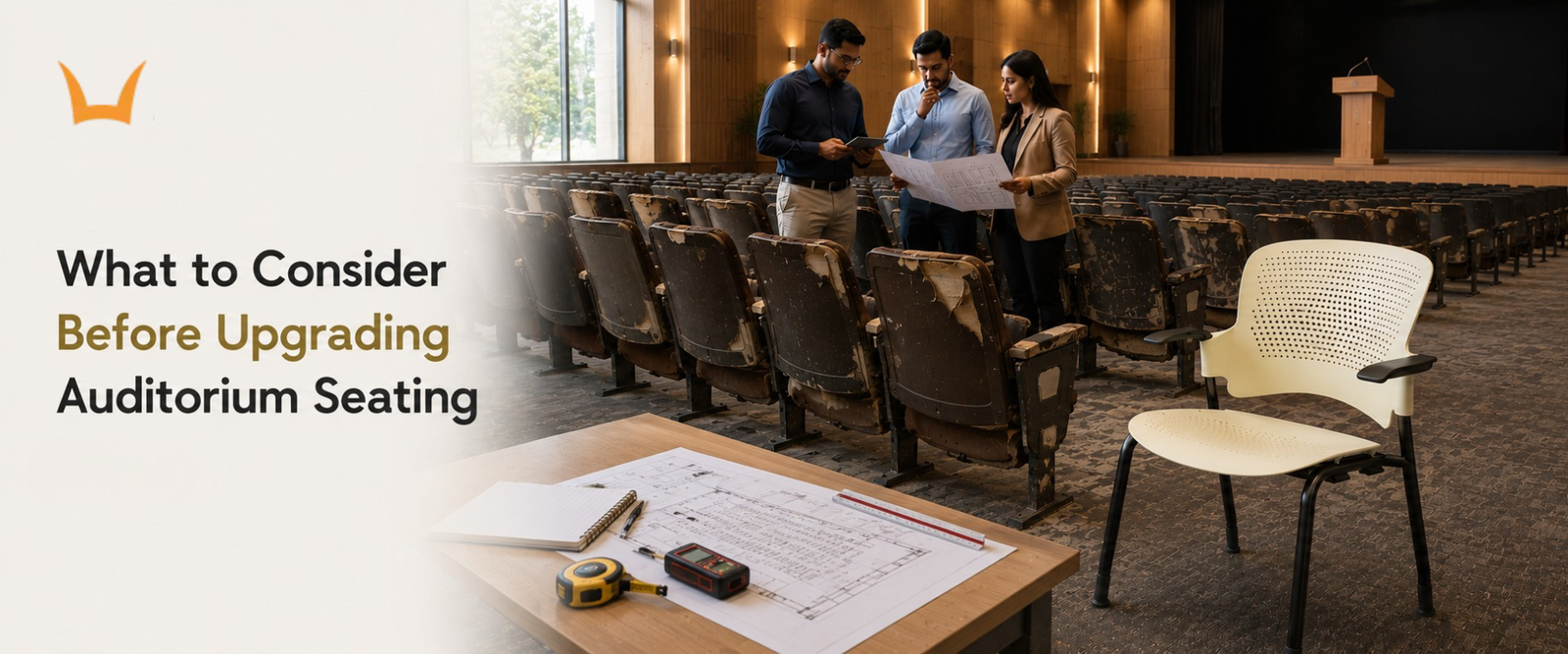
What to Consider Before Upgrading Auditorium Seating
- Why an Upgrade Is Different From a First Time Purchase
- Signs Your Auditorium Seating Actually Needs an Upgrade
- What to Check Before You Commit to an Upgrade
- Full Replacement or Partial Refurbishment
- Hidden Costs Most Planners Forget About
- The Three Upgrade Mistakes That Cost Institutions Most
- Timing the Upgrade Right
- How Syona Roots Approaches Upgrade Projects
TLDR
- Upgrades are different from first installations
- Check repair cost before replacing fully
- Hidden costs decide the real budget
- Phased upgrades work for many halls
- Timing the upgrade right saves money
Introduction
Auditorium seating wears out slowly. Material damages. Frames loosen. Audiences begin complaining. And then one day the question arrives. Is it time to replace it all?
Upgrading auditorium seating is not the same as buying it for the first time. The decision is heavier, the costs are wider, and the risks are higher.
A full replacement with new auditorium seating is a significant investment that can affect comfort, aesthetics, maintenance, capacity, and the flexibility of the venue for years to come. This blog explores the key factors planners should consider before committing to an auditorium seating replacement.
Why an Upgrade Is Different From a First Time Purchase
A first time installation creates something new. An upgrade replaces something that already exists.
This single difference shapes everything. Existing seating must be removed. The hall goes offline during the switch. Old flooring and fixtures may need repair. This single difference shapes everything. Existing seating must be removed. The hall goes offline during the switch. Old flooring and fixtures may need repair. The new seating must improve on the old, not just match it, including chair design and audience sightlines.
Treating an upgrade like a fresh purchase is the most common mistake we see across institutional halls.
Signs Your Auditorium Seating Actually Needs an Upgrade
Not every worn chair needs replacement. Sometimes regular auditorium chair maintenance is enough to extend the seating's service life.
Visible Wear That Maintenance Cannot Fix
Loose screws and torn upholstery are usually fixable. But when frames crack across many chairs, when foam compresses permanently, or when finishes peel widely, maintenance stops being economical.
A simple rule: if repairing twenty percent of the chairs costs more than ten percent of new seating, replacement is the smarter call.
When the Warranty Has Ended and Repairs Become Self Funded
Warranty coverage can help reduce repair costs during the early years of auditorium seating ownership. Once the warranty period ends, maintenance and replacement expenses typically become the responsibility of the venue.
The Syona Venus Series carries a 7-year warranty period. As seating moves beyond warranty coverage, ongoing repair costs and overall seating condition become important factors when evaluating future upgrade requirements.
When Repair Parts Are No Longer Available
Older chair models go out of production. Spare parts disappear. Original upholstery colours leave the catalogue. Replacement frames stop matching the surrounding chairs.
At this stage, even repairs become compromises. The hall starts looking patched together. Upgrading is the cleaner path forward.
What to Check Before You Commit to an Upgrade
Three checks change the upgrade conversation completely.
Run a Real Audit of the Existing Chairs
Count how many chairs are in good condition, how many need minor repair, and how many are beyond saving.
Many planners come into upgrade discussions expecting full replacement. After the audit, sixty or seventy percent of their chairs often turn out to be in usable shape for a few more years. The rest can be replaced in phases.
Match the New Chair to the Hall's Current Use
Halls evolve over years. A space built for one purpose often serves a different mix today. The upgrade moment is when this should be re-evaluated, not when the old design is duplicated by default.
Full Replacement or Partial Refurbishment
Many upgrades do not need full replacement. Partial refurbishment is a real option that most planners overlook.
If chair frames are still strong but upholstery has worn, new upholstery can extend chair life by years. If seat pads have flattened but back panels are fine, replacing pads alone can solve comfort issues.
Full replacement makes sense only when the chair structure is failing or when the hall use has shifted so far that the old design no longer fits. In every other case, refurbishment is worth pricing first.
Hidden Costs Most Planners Forget About
Removal and Disposal of Old Seating
Old auditorium chairs cannot just be thrown away. They have to be unbolted, carried out, and either disposed of properly or sold for scrap. For halls with hundreds of seats, this is a significant operation with real labour cost.
Hall Downtime During the Switch
Every day the hall stays closed is a day of lost bookings, cancelled events, or shifted classes. For institutions that depend on auditorium income or programming, this hidden cost climbs faster than expected.
We always plan upgrades during academic breaks or low usage seasons specifically to reduce this hidden cost.
Flooring or Structural Adjustments
Fixed seating leaves anchor holes in the floor. Tiered flooring may need patch work. Aisles may need repainting. Wall fittings where old mounts existed may need fresh plaster. None of this is in the chair quote, but all of it is part of the real upgrade cost.
The Three Upgrade Mistakes That Cost Institutions Most
The first mistake is rushing the timeline. A full upgrade decided three weeks before an important event leads to hurried installation and chair selection made under pressure.
The second mistake is skipping the existing seating audit. Planners assume everything needs to go without checking. Functional chairs end up replaced for no real gain.
The third mistake is treating the chair quote as the full project cost. The hidden expenses can add a meaningful percentage to the original budget. Institutions that miss this overspend or cut corners during the upgrade.
Timing the Upgrade Right
Right timing changes the experience.
Academic institutions should plan upgrades during summer vacation or winter breaks. Corporate auditoriums should pick the quietest month in their event calendar.
A proper upgrade needs six to eight weeks of planning before installation begins. Anything less leads to compromises during the project.
How Syona Roots Approaches Upgrade Projects
Upgrading auditorium seating involves more than selecting new chairs. Factors such as hall layout, seating capacity, audience comfort, durability requirements, and budget all play an important role in the decision-making process.
Syona Roots offers a range of auditorium seating solutions designed to suit different institutional, educational, and commercial environments. By considering the specific requirements of the venue, planners can select seating options that support both functionality and long-term value.
Conclusion
An auditorium seating upgrade is an opportunity to improve more than appearance. Done thoughtfully, it can extend the useful life of the hall, improve audience comfort, and ensure the space continues to meet the institution's changing needs. The strongest upgrade decisions come from understanding the true condition of the existing seating, the full project costs, and the long-term goals for the venue.
This shifts the focus to the long-term value of the seating upgrade rather than repeating audits, timing, and costs.
Modern Seminar Chairs Designed for Laptop Based Learning
Syona Roots, an auditorium chair manufacturer, works with institutions on the full upgrade process from audit through installation. Whether you are planning a complete seating replacement or upgrading your existing hall in phases, our team helps you select the right seating solution for your venue. From educational institutions and corporate auditoriums to theatres and public spaces, we provide durable, comfortable seating designed for long-term performance, easy maintenance and a professional audience experience.