


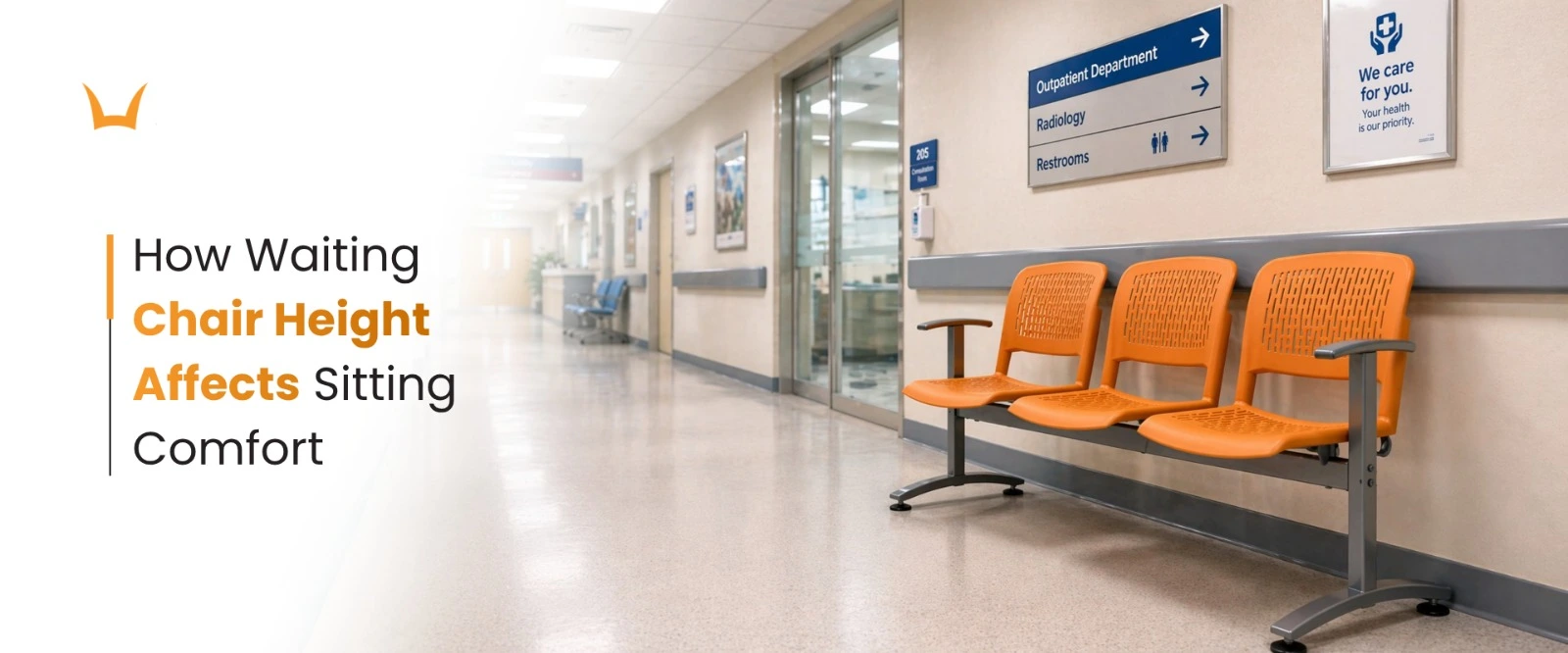
How Waiting Chair Height Affects Comfort & Posture
- It All Starts With the Feet
- When the Chair Is Too Low
- When the Chair Is Too High
- One Chair, Very Different People
- Height Does Not Work Alone
- What to Actually Look for When Buying
- How Syona Approaches This
How Waiting Chair Height Affects Sitting Comfort
For hospital administrators, clinic owners, office facility managers and commercial space planners
Most people picking waiting chairs think about material, looks and price. Nobody really thinks about height. Yet seat height is one of those things that quietly decides whether a chair is comfortable or not, and it affects every single person who sits in it.
A chair set at the wrong height does not announce itself. It just makes the person sitting in it shift every few minutes, feel stiff in the back, and get up more tired than they sat down. In a hospital, a clinic or an office reception where people wait anywhere from fifteen minutes to a couple of hours, that matters quite a bit.
Waiting chair height sounds like a small specification on a product sheet, but it shapes every minute someone spends in that chair.
It All Starts With the Feet
Here is a simple way to think about it.
When someone sits in a chair with the right height, their feet rest flat on the floor, knees are roughly level with the hips and the back settles naturally. The body is balanced. It does not need to work to stay in position.
When the height is off, that balance breaks. The feet dangle, or the knees ride too high, or the person is perching at an awkward angle. The body compensates quietly, using small muscles to stay upright that were not designed for sustained effort. After twenty minutes, those muscles start making their discomfort known.
The right seat height does not feel like anything special. The wrong one makes itself known within the first fifteen minutes.
Healthy sitting posture is not something the body chooses. It is something the chair allows.
When the Chair Is Too Low
A seat that is too low pushes the knees higher than the hips.
This is a more awkward position than it sounds. The lower back loses its natural curve and rounds outward. The back muscles work harder to keep the person upright. Within ten to fifteen minutes, the lower back starts aching and the person shifts, leans or slouches trying to find a better position. The link between chair height and posture shows up most clearly here.
Getting up is also noticeably harder from a low seat. The legs take more load to push the body up to standing. For older users or anyone with knee pain, a low seat turns every time they get up into a small physical struggle.
In a waiting area where someone sits and rises several times across one visit, a seat that is too low becomes a genuine problem by the third time.
When the Chair Is Too High
Too high creates a different set of problems.
When the seat is too high, the feet do not rest flat. The weight of both legs ends up hanging from the hips instead of resting through the feet. The front edge of the seat presses into the underside of the thighs, and that pressure builds fast. This is where seat height and circulation become directly linked.
To escape it, people slide to the seat edge. And then there is no back support. The upper body holds itself upright through effort alone.
Shorter users face this consistently in chairs built for average adult heights. The chair was not designed for them, and they spend the wait managing that.
Both too low and too high have the same end result. The person is uncomfortable, shifting constantly and more tired leaving the chair than when they sat down.
One Chair, Very Different People
In a private office, you adjust the chair to suit yourself. With reception area seating, that option is not there. In a reception lobby or hospital waiting area, a fixed chair height must accommodate everyone who walks in, which is why choosing the right seating from trusted hospital chair manufacturers is so important.
Different heights, different ages, different builds. A seat height that suits one person is awkward for another. A well-chosen height covers the most users reasonably rather than suiting only one type.
In healthcare waiting areas, many users already have back pain or joint stiffness. A mismatch in seat height adds to the discomfort they are already managing. This is why patient seating comfort depends on getting the basics right. The challenge is finding seating that stays comfortable while standing up to constant daily use. This is why durable waiting area seating is essential.
Height Does Not Work Alone
A chair can have the right seat height but still feel wrong if the depth is off. Too deep and the person has to choose between back support and the ability to get up easily. Height and depth have to work together.
The backrest matters too. If the seat height positions the body correctly, a good backrest can support the spine naturally. If the height is wrong, the spine arrives at the backrest in a bad position and nothing the backrest does will fully fix it.
Height, depth, backrest and armrests are all connected. A chair that gets them roughly right feels comfortable from the start. One that gets only one right still leaves the user working.
What to Actually Look for When Buying: Waiting Room Ergonomics Essentials
For general adult waiting areas, sourcing seating from reliable waiting room chair manufacturers who understand ergonomic proportions helps ensure a seat height between 43 and 47 centimetres, covering most users comfortably. The seat depth should let someone sit fully back without the front edge pressing into the backs of the thighs.
Stability matters too. A chair that shifts when someone lowers into it creates instant unease. The chair should feel solid from the first moment of contact.
For spaces serving elderly visitors, armrests at a useful height are worth prioritising. Getting up is much easier when there is something solid to push against. Elderly patients face a distinct set of physical challenges that poor waiting chairs often fail to support adequately.
How Syona Approaches This
Syona waiting chairs are proportioned for institutional use where the same seat must serve a wide range of users. Height and depth work together so most people settle into a comfortable position without needing to adjust from the start.
The contoured backrest supports the spine naturally when the hips are in the right position. Pressure die-cast aluminium armrests are set where they are actually useful for rising. Engineering polymer seating with perforated ventilation keeps the surface cool during longer waits.
Gang seating configurations keep the layout stable and each unit consistent, so the seated experience is the same across every position in the row.
Small Detail. Real Difference.
Seat height is one of those things nobody talks about until they are sitting in a chair that gets it wrong. Then they cannot stop noticing it.
Choosing chairs with seat proportions that work for the actual range of people using them is a straightforward decision that pays off every day. Comfortable visitors wait more patiently. Elderly patients manage their visits more easily.
Planning a waiting area upgrade? Talk to Syona's team about seating built to the right proportions for the people your space actually serves.
Are your waiting chairs designed at the right height for every user?
Seat height plays a key role in how comfortable and usable a waiting chair feels, especially in spaces used by people of different ages and physical conditions. Chairs that are too high or too low can cause discomfort, poor posture, and difficulty in sitting or standing. The right waiting chairs are designed with balanced proportions to support comfort and stability for every user.
Syona builds ergonomic waiting chairs with carefully considered dimensions, supportive backrests and durable construction for real-world use. If you are sourcing comfortable waiting room chairs at scale, our team can help you choose solutions suited to your space and daily footfall.