


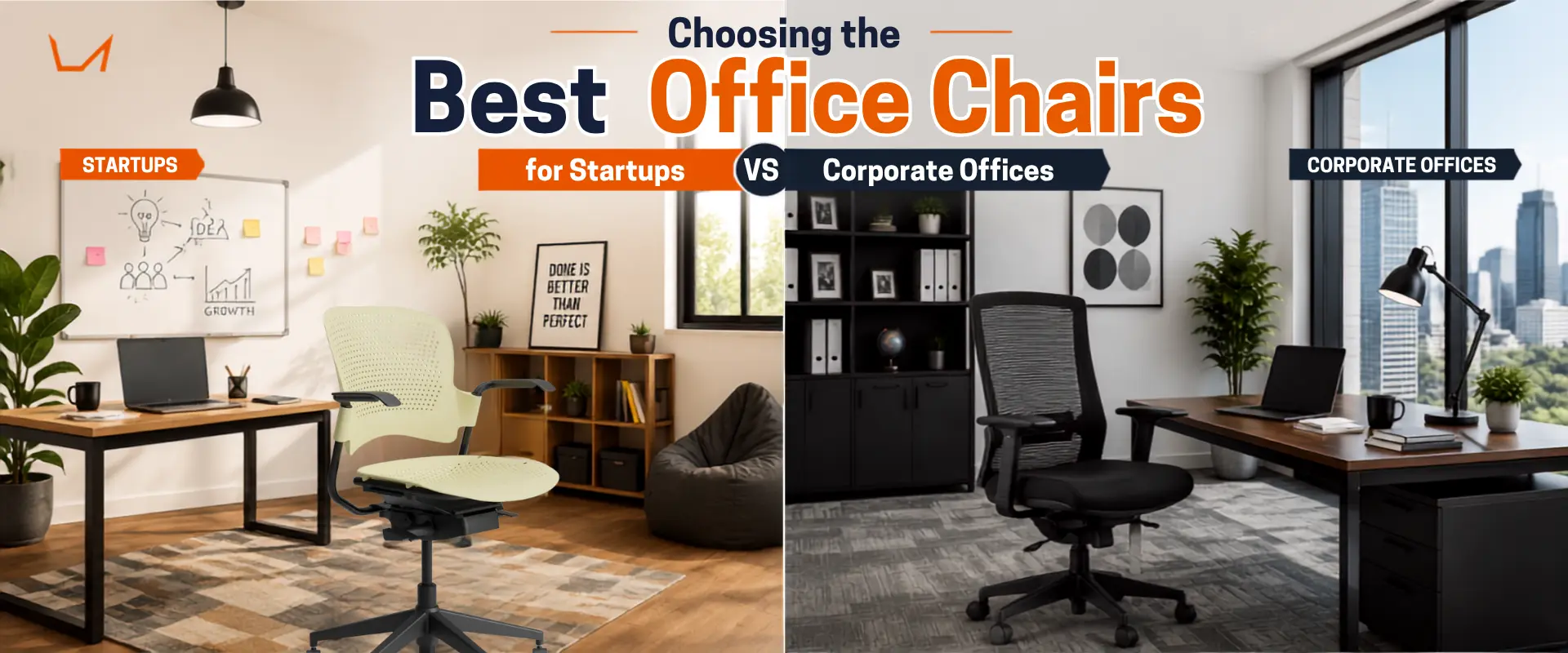
Choosing the Best Office Chairs for Startups vs Corporate Offices
- Why Startups and Corporate Offices Need Different Chairs
- Startup and Corporate Seating Compared
- Choosing Office Seating for a Startup
- What Corporate Office Chairs Need to Deliver at Scale
- Reception, Waiting and Boardroom Seating
- Match the Chair to the Way People Work
- What to Check Before a Bulk Chair Order
A startup and an established corporate office can buy the same chair and both end up with the wrong one because they are solving different problems. A startup may be seating a small team that is expected to grow while working with a budget that needs to stretch. A corporate office is often buying at scale, where consistency, durability and how the workplace looks to employees and visitors matter alongside comfort.
Get the difference right and choosing office seating becomes much easier. Get it wrong and you may overspend on chairs a growing team does not need or choose seating that needs replacing sooner than expected. This guide explains what matters when choosing office chairs, how seating requirements differ between startups and corporate workplaces, and what to consider before placing a bulk order.
Why Startups and Corporate Offices Need Different Chairs
A startup buys against a tight budget and an uncertain headcount. Ten people today could be twenty five in six months, so chairs need to be easy to add in small batches and light enough to move as the layout changes. Comfort still matters, because a small team feels every sick day.
A corporate office buys against scale and permanence. Seating a hundred people multiplies every small difference, so how long a chair lasts decides the real cost per seat. The office also represents the brand, which gives reception, waiting areas and leadership spaces weight that a startup floor simply does not carry yet.
Neither set of needs is better. They point to different chairs, which is why the same product can be right for one office and wrong for the other.
Startup and corporate seating compared
| Startup | Corporate office | |
|---|---|---|
| First priority | Affordable comfort that scales | Durability and a consistent look |
| Buying pattern | Small repeat batches from a short list | One or two standard models in volume |
| Main desks | Venus Prime Plus, with Mars Optima for longer sitting | Neptune Ease, with Venus Excel for managerial spaces |
| Other seating | Venus Pride for visitor, meeting and occasional-use areas | Venus Prime for visitor and meeting areas |
| Biggest risk | Choosing low-cost seating that needs early replacement | Standardising the wrong chair across a large workspace |
Choosing Office Seating for a Startup
Startups usually need office chair that balance comfort, flexibility and value. Teams can grow quickly and layouts may change, so choosing a small number of dependable models can make it easier to furnish different areas and reorder seating as new employees join. If employees divide their time between the office and home, the seating plan should also work alongside their home workstation setup.
Budget matters, but choosing the cheapest chair is not always the most practical approach. A durable chair that continues to perform well can reduce the need for frequent replacements. The Syona Venus Prime Plus is a practical option for everyday workstations, with an engineering polymer build, lumbar support and PBTE armrests.
For employees who spend longer periods at their desks, additional ergonomic support is worth considering. The Mars Optima adds a high-grade mesh back, cushioned seat, tilt and height adjustment to support longer working hours.
For visitor, meeting and occasional-use areas, the Venus Pride provides a practical seating option without requiring the features of a full-day task chair.
What Corporate Office Chairs Need to Deliver at Scale
Corporate offices need to think beyond the price of an individual chair. When seating a large workforce, durability, comfort, visual consistency and ease of replacement all become important parts of the purchasing decision.
Durability matters most when you are buying hundreds of chairs. A chair that lasts for years reduces the need for frequent replacements and makes the overall cost easier to manage. This is why Syona uses engineering polymer across much of its commercial seating range.
Comfort is just as important for employees who spend most of the day at their desks. The Neptune Ease is designed for full-day work, with a high-grade mesh back and dedicated lumbar support. For managerial workspaces, the Venus Excel adds a reclining function while keeping the same polymer construction.
Reception, waiting and boardroom seating
These are the zones a startup can keep simple and a corporate office cannot, because the seating a visitor meets first says the most about the brand.
Reception needs seating that looks composed and survives constant use. The Venus Prime visitor chair covers it, with the armless Venus Pride where space is tight.
Waiting areas call for tandem seating that fills a row cleanly. The Venus Gang range runs from a two-seater to a five-seater, with the larger variant adding a die cast aluminium armrest and lumbar support for longer waits.
The boardroom is where presentation counts most. The Duorest Alpha is the executive answer, a high back chair with a dual backrest that spreads pressure across the spine, an adjustable headrest, dynamic lumbar support and flex armrests.
Match the Chair to the Way People Work
Purchase by how long a seat is occupied and what the space is for. Full day desks need adjustment and back support. Shared or lighter use desks are well served by a value chair. Pass through zones need seating built for short use and easy cleaning. Leadership spaces need presentation alongside comfort.
That single rule prevents the two most expensive errors: putting an executive chair at a desk where a task chair would serve better, and seating a full day worker in a chair meant for visitors.
Standardising then pays off differently for each buyer. For a startup it means every new hire slots into a chair you already trust, with no fresh decision each time. For a corporate office it simplifies reordering, keeps the floor visually consistent and makes the most of bulk pricing.
What to Check Before a Bulk Chair Order
The chair itself is only one part of a bulk seating purchase, so choose bulk chair suppliers who can support the whole process. Before placing an order, check the practical details that can affect delivery, installation and future expansion.
Lead time: Confirm when the full quantity can be delivered and whether larger orders can be delivered in phases.
Minimum order quantity: Check the minimum quantity required and whether smaller repeat orders can be placed as your team grows.
Delivery and assembly: Confirm whether chairs arrive fully assembled or require assembly on site, and whether assembly support is included for bulk orders. With a large order, consistent chair assembly matters because incorrectly fitted components can affect how the chair functions.
Invoicing and GST: Make sure the required invoices and GST documentation can be provided for your finance team.
Future availability: If you plan to standardise a chair across the office, check whether the same model is likely to remain available for future orders.
Spare stock: Keeping a small number of extra chairs can make it easier to accommodate new employees or temporary seating requirements.
Warranty: Review the warranty period, what parts are covered and how warranty claims are handled.
Frequently asked questions
Can we mix chair models across one office?
Yes, and it usually works out better than putting everyone in the same premium model. Keep the mixing deliberate, one model per zone rather than per person, such as workstations, meeting rooms, reception and leadership spaces, so the floor still looks intentional.
How many spare chairs should we hold?
Enough to cover expected joiners over the next quarter, plus one or two for breakages. For a fast-growing team this is worth planning at the first order, because adding a handful later rarely attracts the same terms.
Is it better to replace chairs all at once or in stages?
Replacing by zone spreads the cost and keeps the office looking consistent. Start with the desks people occupy longest, since those seats carry the most wear and generate the most complaints.
Ready to Seat Your Office?
A well-planned seating choice can support your team as the business grows, while making future replacements and additions easier to manage.
If you are planning a new office or replacing existing seating, get in touch with Syona to discuss your requirements. Our team can help you find practical seating options for your workspace and budget.
Choose the Right Office Chairs for Your Workplace
Choosing office chairs for a startup or corporate workplace is about more than finding a comfortable seat. The right mix should reflect how people use each space, how quickly your team may grow and how much durability and consistency your workplace requires.
From everyday task chairs and ergonomic seating to reception, meeting and executive chairs, Syona offers commercial seating designed for different workplace requirements. Whether you are furnishing a growing startup or planning a larger corporate fit-out, choosing the right models by zone can make future additions, replacements and upgrades much easier.