


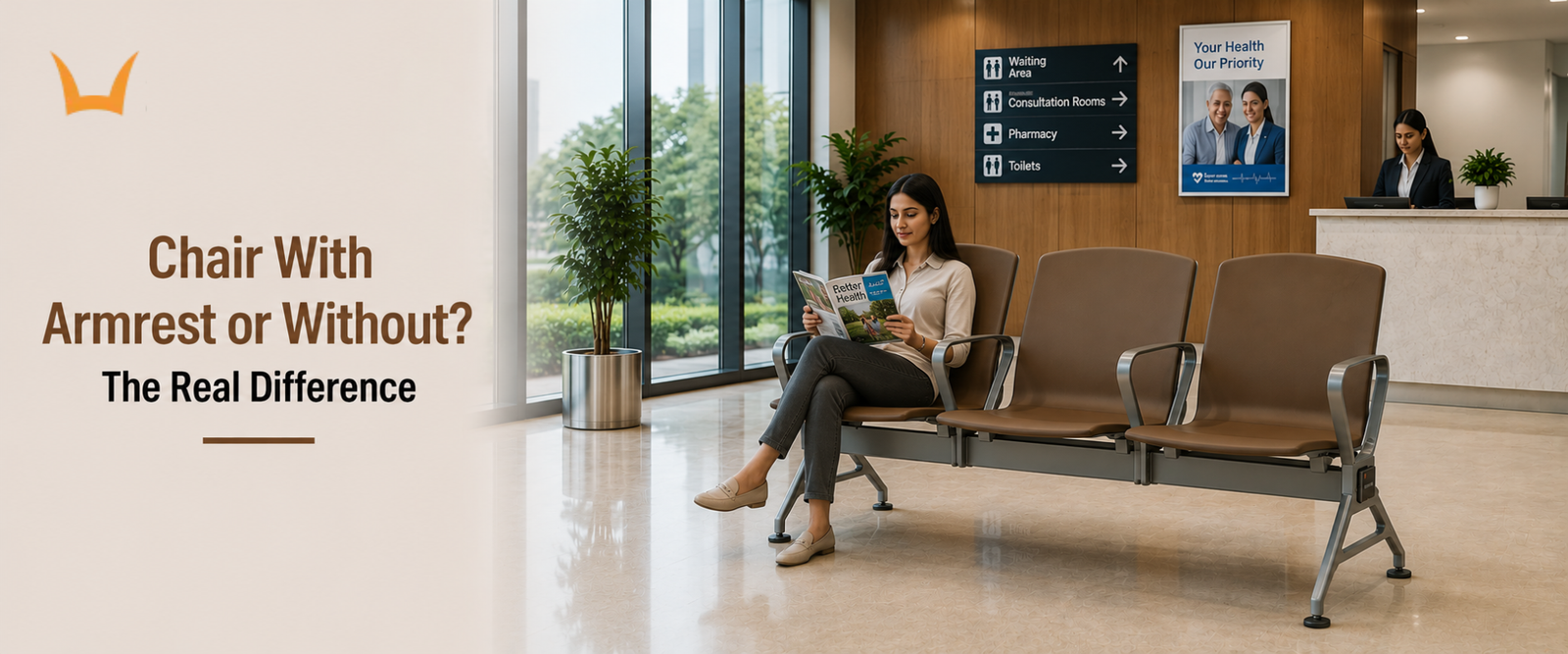
Chair with Armrest or Without? A Complete Waiting Room Buying Guide
- Benefits of Waiting Chairs with Armrests
- When Are Armless Waiting Chairs a Better Choice?
- Chair with Armrest vs Without Armrest
- Why a Three-Seater Waiting Chair Is the Popular Choice
- How to Choose the Right Waiting Room Chair
- Why Syona Roots Three-Seater Waiting Chairs Include Armrests
- Frequently Asked Questions
Introduction
Choosing between a chair with armrests and an armless chair may seem like a small detail, but it can significantly affect comfort, accessibility and the overall experience in a waiting room. Whether you're furnishing a hospital, clinic, office, college or public reception area, the right seating should suit both your visitors and your available space. The choice should also reflect factors such as expected footfall, average waiting times and the level of support visitors are likely to need on a daily basis.
Across our Venus Gang, Jupiter Awe and Jupiter Ace Mid Back three-seater waiting chairs, armrests are standard. Here's why they matter and when armless seating may be the better choice.
Benefits of Waiting Chairs with Armrests
Armrests do more than add comfort. In busy waiting areas, they improve accessibility, create personal space and contribute to the chair's overall strength.
Easier to Sit and Stand
Armrests provide support when sitting down or standing up, making them especially useful for elderly visitors, patients and anyone with reduced mobility.
Greater Comfort During Longer Waits
They reduce pressure on the shoulders and arms, helping visitors remain comfortable during longer waiting periods.
Better Personal Space
Armrests clearly define each seat, creating individual seating spaces that encourage comfortable distancing between users and a more organised seating layout.
Stronger Beam Seating
On multi-seater waiting chairs, armrests form part of the overall frame, adding stability and durability for heavy daily use.
When Are Armless Waiting Chairs a Better Choice?
Although armrests are the preferred choice for most waiting rooms, armless seating can work well in specific environments.
It may be suitable where:
- Waiting times are short.
- Maximising seating capacity is the priority.
- A more open seating layout is preferred.
- Faster cleaning and maintenance are important.
These spaces often include airports, railway stations, office reception areas, and other high-traffic waiting areas.
Chair with Armrest vs Without Armrest
| Feature | Chair with Armrests | Chair without Armrests |
|---|---|---|
| Comfort | Better for longer waits | Suitable for shorter waits |
| Accessibility | Easier to sit and stand | Less support |
| Personal Space | Clearly defined seating | More open seating |
| Seating Capacity | Slightly fewer seats | Higher seating capacity |
| Cleaning | More surfaces | Easier to clean |
| Best Suited For | Hospitals, clinics, offices, colleges | Transit areas and high-turnover spaces |
Why a Three-Seater Waiting Chair Is the Popular Choice
Waiting chairs come in two to five-seat beams, and the three-seater is the one most facilities reach for first. It sits at a versatile middle size: efficient enough per seat to furnish a room quickly, yet compact enough to move, angle into a corner and fit through a standard doorway with ease. That makes it the easiest unit to standardise on when a building has waiting areas of different shapes and sizes.
It also lays out well in almost any room, lined along a wall, set back-to-back down the middle of a larger space, or added a unit at a time as demand grows. Where a space calls for something different, the shorter two-seater suits tight corners and smaller rooms, while four and five-seaters make quick work of long walls and high-capacity halls. Starting from the three-seater simply gives most facilities the most flexible base to build on.
How to Choose the Right Waiting Room Chair
The right seating depends less on looks than on how the space is used. Six things are worth weighing up before you buy:
Average waiting time. The longer people sit, the more padding and back support you need. For long waits, think upholstered chairs with armrests; for quick turnover, hard-wearing beam seating is usually enough.
Visitor age and accessibility needs. Where you serve elderly visitors, patients or anyone with reduced mobility, armrests become close to essential, since they give the support needed to sit and stand safely.
Daily footfall. High-traffic areas need frames and upholstery rated for heavy use. Beam seating in steel or vinyl takes the wear far better than lighter domestic-style chairs.
Available floor space. Beam units seat several people off a single frame, making the most of a tight room, while individual chairs offer flexibility where the layout changes often.
Cleaning and maintenance. In clinics and other hygiene-sensitive settings, wipe-clean vinyl or polypropylene beats fabric, which holds stains and takes longer to sanitise.
Required capacity. Match the seat count to your busiest periods, not the average, a waiting room that overflows at peak sends the wrong message and leaves people standing.
These factors will help determine whether seating with armrests or armless seating is the better fit for your facility.
Why Syona Roots Three-Seater Waiting Chairs Include Armrests
Our Venus Gang, Jupiter Awe and Jupiter Ace Mid Back waiting chairs are designed for demanding commercial environments.
Each model features die-cast aluminium armrests with PBT, offering excellent durability for busy hospitals, clinics, offices, colleges and public spaces. Because the armrests form part of the chair's structural frame, they provide added strength as well as everyday comfort.
If you're also weighing seat material, engineering nylon and PU foam are the two most common options across commercial waiting chairs, each suited to different waiting room needs.
Need Help Choosing the Right Waiting Chair?
Whether you're furnishing a hospital, office, educational institution or commercial reception area, our team can help you choose the right waiting chair based on your space, visitor numbers and seating requirements. Contact us for expert advice and bulk enquiries.
Frequently Asked Questions
Can I buy a 3-seater waiting chair without armrests?
No. Our three-seater waiting chairs are designed with integrated armrests that form part of the structural frame, so an armless option is not available.
What are the armrests made from?
The armrests on our Venus Gang, Jupiter Awe and Jupiter Ace Mid Back models are manufactured from die-cast aluminium with PBT, providing strength and durability for commercial use.
Does the side table replace an armrest?
No. The optional side table is an additional feature and does not replace the armrests. Chairs retain their standard armrests whether or not a side table is selected.
Are armrests available on the 2, 4 and 5-seater models?
Yes. Armrests are standard across the Venus Gang range, regardless of whether you choose a 2, 3, 4 or 5-seater configuration.
Ready to Choose Your Waiting Room Seating?
As experienced waiting chair manufacturers and suppliers in India, Syona Roots provides durable seating solutions for hospitals, clinics, offices, colleges and other high-traffic spaces. Explore our hospital waiting and visitor chairs or send a bulk enquiry for your project requirements.