


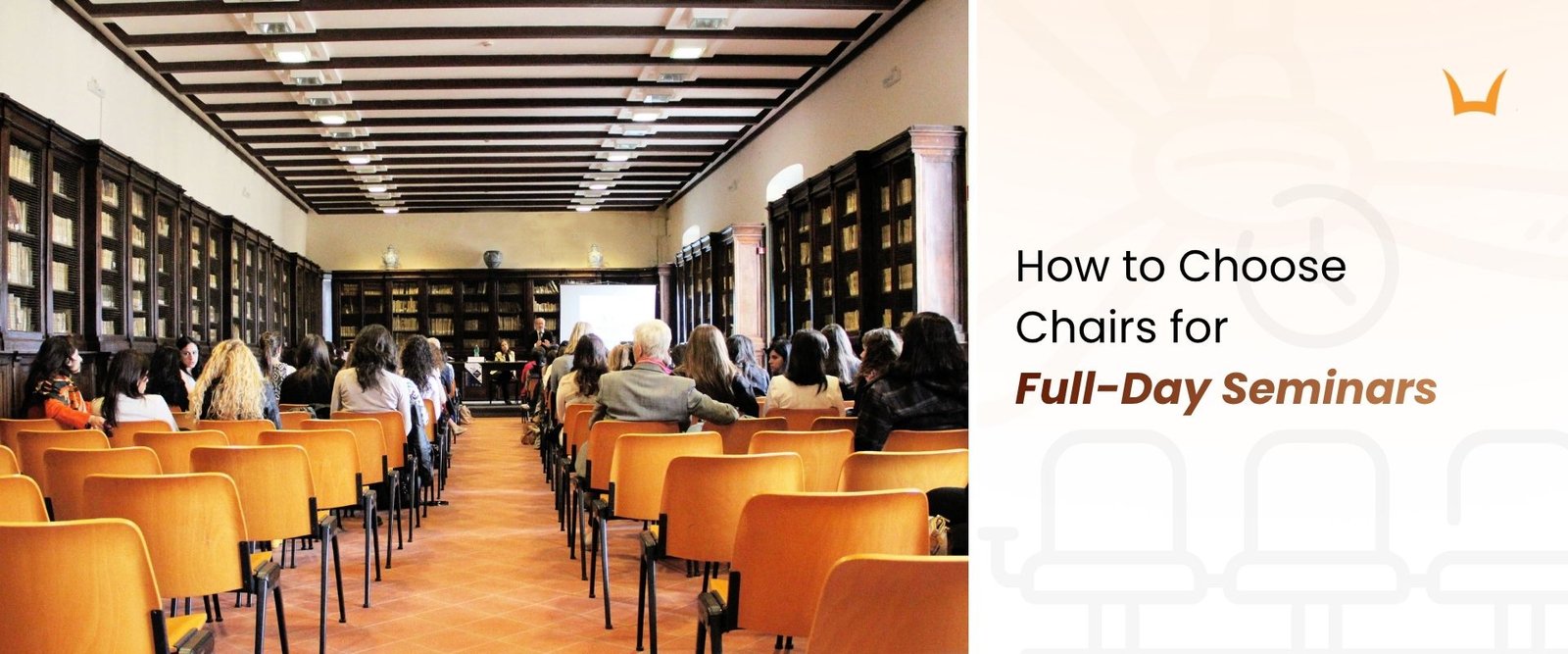
How to Choose Chairs for Full-Day Seminars
- Why Full-Day Seminars Need a Different Kind of Chair
- The Real Pain Points of Long-Hour Seating
- Lower Back Pain and Stiffness
- Hip Pressure and Numb Legs
- Heat Build Up and Sweat
- Wobbling Writing Pads
- Must-Have Features in Full-Day Seminar Chairs
- Strong Lumbar Support
- Cushioning That Holds Its Shape
- Breathable Back and Seat
- Stable Writing Pad That Stays Put
- Solid Steel Frame With Anti-Rust Coating
- Choosing the Right Chair Type for the Session Format
- Smart Buyer Questions Most People Forget to Ask
TLDR
- Full day sitting is a different game
- Lumbar and airflow are non negotiable
- Strong frames last past one season
- Writing pads must hold steady
- Comfort drives focus, focus drives results
Introduction
Some chairs are built for short meetings. Others are built to survive long days. The difference shows up only after hour three.
A full day seminar puts the body and the chair through a real test. Backs ache. Hips go numb. Necks stiffen. Writing pads start wobbling. By lunch, focus is fading. By evening, half the room is just waiting for it to end.
The chair is often the silent reason. A wrong seat can ruin a brilliant session. A right one can carry attendees through a full day without complaint in seminar hall seating.
This blog breaks down what truly makes a chair fit for full day seminars and how to choose well.
Why Full-Day Seminars Need a Different Kind of Chair
Short meetings forgive bad chairs. The body adjusts. The mind moves on. But a full day session offers no escape. Every poor choice in design starts to show.
A chair that feels fine for thirty minutes can feel painful for six hours. Cushions flatten. Backrests fail to hold shape. Pressure points start hurting. The body stops cooperating.
Buying full day chairs is not about buying nicer chairs. It is about buying chairs designed for endurance. Different goal. Different design rules. Different result.
The Real Pain Points of Long-Hour Seating
Lower Back Pain and Stiffness
The lower back takes the brunt of long sittings. Without firm lumbar support, the spine slumps. Muscles tighten. Pain creeps in slowly and sticks long after the session ends.
Hip Pressure and Numb Legs
Soft cushions feel nice at first. But poor density compresses fast. By mid afternoon, the seat feels hard. Hips start aching. Legs lose blood flow.
A good full day seat keeps its shape and spreads pressure evenly across the sitting bones.
Heat Build Up and Sweat
Solid backrests trap heat. Closed seat surfaces hold sweat. Both kill comfort fast. Attendees keep shifting just to feel less sticky.
Airflow is one of the most overlooked features in long duration seating. It quietly decides whether the user feels fresh at hour seven or drained.
Wobbling Writing Pads
Nothing breaks focus faster than a writing pad that shakes every time the user types or notes. Cheap pads tilt, slide, or sag under weight. The user wastes energy correcting it instead of learning.
A stable writing pad is not a luxury. It is the working surface of a full day seminar with proper laptop support .
Must-Have Features in Full-Day Seminar Chairs
Strong Lumbar Support
The backrest must hug the natural curve of the lower spine. Not a flat pad. Not a generic cushion. A shaped support that keeps the back upright without forcing it.
This single feature reduces fatigue more than any other.
Cushioning That Holds Its Shape
Look for high density foam that does not collapse with use. The seat should feel firm enough to support, yet soft enough to absorb pressure. The right balance keeps the body comfortable through every hour.
Cheap padding loses bounce within months. Quality padding stays consistent for years.
Breathable Back and Seat
Mesh backs and perforated seats allow air to move. The body stays cool. Sweat dries. Discomfort drops sharply.
In hot or crowded seminar halls, breathable design is the difference between focus and frustration.
Stable Writing Pad That Stays Put
A solid tablet arm should lock firmly. It must hold a notebook or a laptop without bouncing. The hinge should be strong enough to handle daily use without loosening.
This small detail decides whether attendees take notes or wrestle with their gear.
Solid Steel Frame With Anti-Rust Coating
A full day chair faces real abuse. Constant sitting. Frequent moving. Daily cleaning. The frame must be built for it.
Heavy duty steel frames with anti rust coating outlast cheaper alternatives by years. They also keep the chair stable across thousands of sessions.
Choosing the Right Chair Type for the Session Format
Not every seminar needs the same chair. The format of the session decides the right design.
Lecture style sessions with steady seating need writing pad chairs. The fixed pad keeps notes or laptops in place. The chair stays in one spot. Comfort and stability matter most.
Auditorium chairs work well in fixed seating halls. They give the best back support and a clean look. They suit long training programmes and graduation ceremonies where attendees stay seated for hours.
Stackable chairs fit halls with mixed use. The seminar today becomes a workshop tomorrow. Stackable chairs allow for fast layout changes without losing comfort.
Foldable chairs help in rooms that double as storage spaces. They free up the floor when not in use and provide solid seating when needed.
A smart buyer matches the chair type to the format of the session. The right match removes friction from setup and keeps attendees comfortable.
Smart Buyer Questions Most People Forget to Ask
Before buying, ask the seller a few sharp questions.
Is the cushion foam high density or low density? This decides comfort over time.
Is the writing pad locked or only resting? A loose pad fails fast.
Does the back panel breathe or trap heat? Long sessions feel longer in trapped heat.
What is the warranty period? A short warranty signals weak build.
Can the chair stack or fold? This affects long term flexibility of the room.
What is the steel grade and coating type? This decides how long the frame will last.
How is the chair tested for daily use? Real testing beats marketing claims.
If the seller hesitates on these questions, walk away. A good manufacturer will answer with confidence.
Conclusion
A full day seminar is a marathon. The chair has to keep up. Lumbar support, airflow, cushion density, stable writing pads, and strong frames are not extras. They are the basics that decide success.
Pick a chair that respects the user. Pick a chair that respects the duration. The difference will show in attendee energy, focus, and feedback every single time.
Upgrade Your Seminar Hall Seating for All-Day Comfort
Choose seminar seating designed for long session comfort, durability, and daily performance. From ergonomic lumbar support to stable writing pads and strong steel frames, the right chair setup helps attendees stay focused, comfortable, and productive throughout the day with reliable solutions from Syona. Because expecting people to stay attentive for eight hours on a bad chair is basically an advanced endurance experiment disguised as training.