


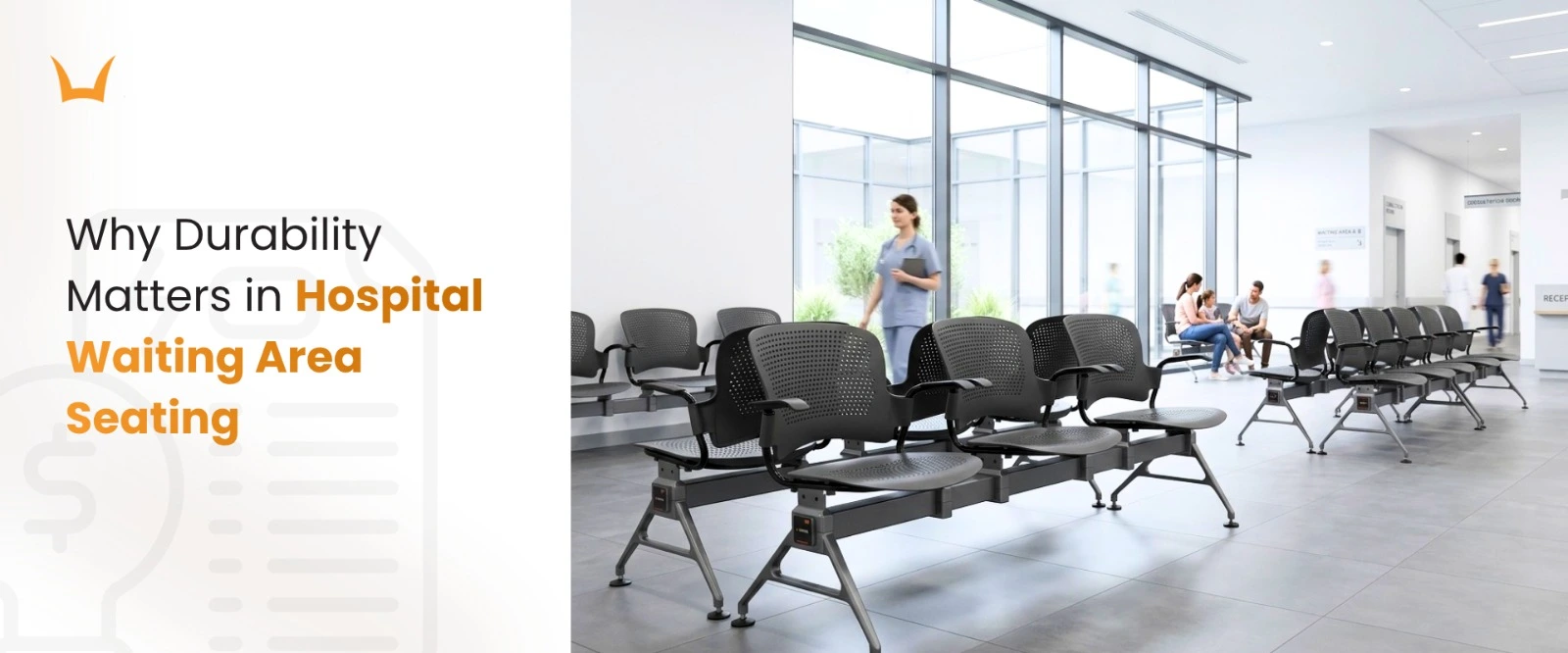
Why Durability Matters in Hospital Waiting Area Seating
- Hospital Waiting Areas Run Harder Than Most People Realise
- Daily Disinfectant Cleaning Wears Chairs Down Faster
- A Damaged Chair Surface Is a Hygiene Problem
- One Bad Procurement Decision Affects Every Waiting Area
- Waiting Area Condition Is Part of Accreditation
- What to Verify Before Buying
- How Syona Waiting Chairs Hold Up in Hospital Conditions
For hospital administrators, clinic managers, architects and facility planners
Durability is the one factor that gets undervalued every time a hospital buys waiting chairs. Price gets attention. Appearance gets attention. How long the chair actually holds up in hospital conditions barely comes up until the problems start showing.
Hospital waiting areas are not gentle environments. They run long hours, handle hundreds of different users, get cleaned with strong disinfectants daily and cannot afford downtime for replacements. Chairs that were not built for these specific conditions start showing it within a year, sometimes less.
Hospital Waiting Areas Run Harder Than Most People Realise
An OPD runs from early morning to evening. Emergency waiting zones have no closing time. Specialty clinic areas may have patients and attendants in the same chair for three to four hours at a stretch.
The same chair handles different users, different weights, different sitting durations all through a single day. The cumulative load on a hospital waiting chair across a year is far higher than most commercial seating was designed to handle. For patients sitting through long waits, the ability to rise safely from a waiting chair becomes a structural requirement that standard commercial designs often overlook.
A specialised hospital seating manufacturer takes these demands into account by designing chairs for continuous use, higher occupancy rates, and the unique needs of healthcare environments.
Most waiting chairs are built to a commercial specification that does not account for hospital pace and duration. Chairs that would last five years elsewhere can wear out in two in a busy OPD.
Hospital waiting chairs are not used like most public seating. They deserve a specification that reflects that difference
Daily Disinfectant Cleaning Wears Chairs Down Faster
Hospitals clean waiting area furniture with disinfectants and sanitising agents. These are stronger chemicals, necessary for infection control, and harder on chair materials than routine cleaning products.
Seat surfaces exposed to disinfectants multiple times a day begin to dull and crack over months. Frame coatings that were not designed for repeated chemical exposure thin out and leave the underlying metal vulnerable. The deterioration is gradual, but it is faster than the chair's expected lifespan would suggest.
A reputable healthcare seating manufacturer selects materials and protective finishes specifically to withstand frequent cleaning and long-term exposure to hospital-grade disinfectants.
This is a specification mismatch, not a maintenance failure. A chair rated for hospital-grade cleaning holds up. One rated for general commercial use does not, regardless of how carefully it is maintained.
When evaluating waiting chairs for hospital use, always verify that the surface material and frame coating are rated for the specific disinfectants your cleaning team uses. Not all chairs that look appropriate are built for this.
A Damaged Chair Surface Is a Hygiene Problem
Once a seat surface cracks or starts peeling, it cannot be thoroughly disinfected. Pathogens settle in crevices that a cleaning cloth cannot reach. The cleaning team can wipe the chair as often as needed and still not achieve a properly sanitised surface.
This means chair durability in a hospital is directly linked to infection control. A chair that maintains a smooth, intact surface can be disinfected reliably. One that has begun to deteriorate cannot be, no matter how frequently it is cleaned.
Chairs that looked perfectly fine at purchase can start failing hygiene audits well before anyone expected to replace them. A durable, intact surface is not cosmetic in a hospital. It is functional.
One Bad Procurement Decision Affects Every Waiting Area
Hospitals do not buy waiting chairs in ones and twos. They buy in bulk. One specification, one supplier, one order covers the OPD, the specialty clinics, the emergency department waiting zones and the general reception areas all at once.
If that specification is wrong, the problem is not contained to one corner of the hospital. It shows up everywhere simultaneously. Maintenance requests come in from multiple departments. Staff are managing wobbly, worn chairs across the facility at the same time.
There is no easy mid-cycle correction. The chairs are in, the budget is spent. The only path is managing the deterioration until the next procurement cycle, at a cost that was never in the original plan.
Getting the durability specification right before placing a bulk hospital order is far easier and far cheaper than managing the consequences of getting it wrong.
Waiting Area Condition Is Part of Accreditation
Hospitals pursuing NABH or JCI accreditation are assessed on the physical condition of patient-facing areas. Waiting zones are among the areas assessors walk through.
Seating that is structurally sound and well-maintained reflects how the facility manages its infrastructure. Seating that is visibly worn or patched sends a different message, to assessors and to every patient who sits in it.
Durable chairs bought at commissioning still hold up three or four years later. Under-specified chairs need replacement before the next accreditation cycle, which means unplanned cost and disruption.
What to Verify Before Buying
Ask whether the seat surface and coating are rated for disinfectant and bleach-based agents. That single question separates hospital-grade chairs from general commercial ones.
Check the load rating against your busiest waiting zone. The chair needs to hold up under peak conditions, not just average ones. Seat height and proportions deserve the same level of scrutiny as load ratings when specifying chairs for a diverse patient population.
For gang seating, confirm that individual seat units can be replaced without removing the full row. In a working hospital waiting area, being able to swap one failed seat without disrupting the rest of the row is a practical advantage that adds up significantly over years of use.
How Syona Waiting Chairs Hold Up in Hospital Conditions
Syona waiting chairs are built for institutional and healthcare environments where the demands are different from standard commercial use. The engineering polymer seating surface resists the cracking and surface degradation that comes from daily hospital-grade disinfectant exposure, maintaining a cleanable, intact surface across years of use.
The frame is rated for high load capacity, handling sustained daily OPD use without structural fatigue. Pressure die-cast aluminium armrests hold their integrity under repeated loading of patients sitting and rising across a full visit.
Gang seating units are individually replaceable. When one seat needs attention, that unit swaps out while the rest of the row stays in service. In a hospital where every seat counts, that is how maintenance should work.
Durability Is Not Optional in Hospital Seating
Hospital waiting area chairs face a specific combination of demands that most commercial seating was never built for. Long hours, varied users, daily disinfectant cleaning and the inability to take seating out of service without immediately affecting patients.
Choosing chairs built for these conditions costs more upfront and considerably less over five years when maintenance, replacements and accreditation readiness are counted together.
If your hospital is planning a waiting area seating purchase, talk to Syona's team first. Chairs built for hospital conditions perform differently from the start, and the difference compounds every year they are in service.
Are your hospital waiting chairs built to handle real daily use?
Hospital waiting chairs face constant use, heavy loads, and daily disinfectant cleaning. Poor durability leads to early damage, hygiene risks, and repeated replacement costs. Choosing the right seating ensures long-term performance, easier maintenance, and a better patient experience across every waiting area.
Explore Syona’s waiting chairs built for healthcare environments, designed to withstand continuous use while maintaining strength and cleanability. For bulk requirements, connect with our team to get the right solutions and pricing tailored to your facility.