


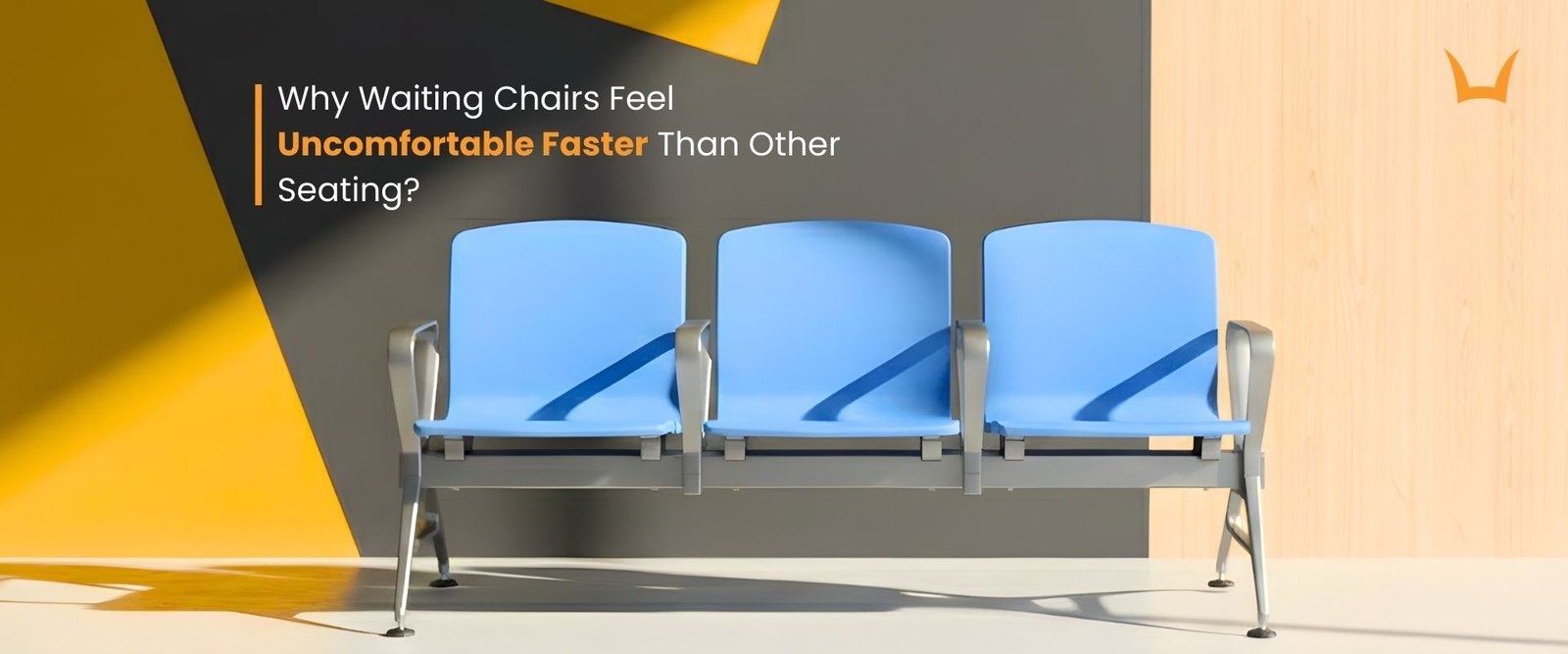
Why Waiting Chairs Feel Uncomfortable Faster Than Other Seating
- These Chairs Are Made for 20 Minutes, Not 90
- Why Waiting Chairs Are Built for Durability, Not Comfort
- How Lack of Back Support Causes Faster Discomfort
- How Chair Materials Affect Sitting Comfort
- Packed Waiting Areas Increase Seating Discomfort
- Why Waiting Makes People More Sensitive to Discomfort
- What Better Waiting Area Seating Should Look Like
You have seen this happen, right?
Someone walks into your waiting area, takes a seat and looks perfectly fine. Ten minutes later they are shifting in the chair. Twenty minutes in, they are standing up and stretching. By the time their name is finally called, they already look exhausted and irritated.
Nothing changed in the room. The chair did not change either. So what went wrong?
The chair was simply never built for how long people actually have to sit in it.
That is the real problem. There is a gap between how waiting chairs are designed and how they are actually used every day. And this gap is what creates most of the discomfort your visitors, patients and guests feel in your space.
Let us understand this step by step.
These Chairs Are Made for 20 Minutes, Not 90
Most people do not know this, but every chair is designed with a usage time in mind.
Office chairs are built to keep you comfortable for 6 to 8 hours. Waiting chairs are built for just 15 to 45 minutes.
That is not a mistake. It is a deliberate design choice. In places like hospital lobbies, bank branches and office reception areas, hundreds of people use the same chair every single day. The chair just needs to hold each person for a short time and then be ready for the next.
The trouble starts when waiting times go beyond that window.
A 15 minute appointment stretches to 90 minutes. A quick bank visit becomes an hour long wait. Now the chair is being used in a way it was never designed for. And the body starts feeling it very quickly.
These Chairs Are Built to Last, Not to Comfort
When purchasing waiting room chairs for a hospital or office, the first questions are always the same.
How long will it last? How easy is it to clean and maintain?
These are fair questions. Nobody wants to replace 200 chairs every two years. So manufacturers build what buyers ask for. Strong metal frames. Hard seat bases. Very little padding. Surfaces that are easy to wipe clean and resistant to everyday wear and tear.
All of this makes complete sense from a procurement point of view.
But real comfort needs something different. A good chair should give a little under your body weight. It should spread the pressure evenly. It should support your natural sitting posture. Most waiting chairs are simply not designed with any of this in mind.
A chair built only to survive heavy use will feel exactly like that after the first 20 minutes.
No Back Support Means Your Muscles Do All the Work
This is the biggest physical reason why discomfort hits so fast.
A proper ergonomic chair has a backrest that gently follows the curve of your lower spine. This is called lumbar support. Because of this curve, your back muscles can actually relax. The chair is doing part of the job for you.
Waiting chairs do not have this. The backrest sits at one fixed upright angle. There is no lumbar curve at all. The armrests, if they even exist, are mostly there to separate one seat from the next. They do not actually support your arms or shoulders.
After about 20 to 30 minutes of sitting like this, your back muscles start getting tired from holding your spine up on their own.
So your body starts looking for relief. You shift to one side. You lean forward. You cross and uncross your legs. You stand up and pretend to check your phone.
That restlessness you see in every waiting area is not just impatience. It is the body asking for support that the chair is simply not giving.
The Material of the Chair Creates Its Own Problems
The material used in a chair decides how it feels over time. And most waiting chairs are made from materials that work against the body after a while.
Metal and steel surfaces are temperature sensitive. They feel cold in an air conditioned room and uncomfortably warm in humid spaces. Neither is something you want to sit on for an hour.
Plastic shells are completely rigid. They do not flex or adjust to your body shape. All the pressure from sitting lands on the same two or three bony points at your hips and lower back. After 20 minutes, that pressure becomes very noticeable.
Low quality foam flattens out very quickly under body weight. Once it compresses fully, you are basically sitting on the hard base underneath the foam. Whatever softness the chair had at the start is gone within the first few minutes.
Put all three together and you have a chair that feels okay for the first ten minutes and genuinely painful by the time you reach thirty.
Packed Waiting Areas Make Everything Feel Worse
The chair is not working alone here. The space around it makes the discomfort worse.
Most waiting areas in Indian hospitals, offices and public institutions are tightly packed. Chairs are placed close together to fit as many people as possible. Walkways are narrow. Standing up to stretch means disturbing the person sitting next to you. In linked row seating, every time someone nearby shifts, you feel it in your seat too.
And there is a psychological side to this as well.
When you feel physically crowded, your stress levels go up. And a stressed body feels every bit of discomfort much more sharply.
A chair that might feel acceptable in an open and calm environment starts feeling much worse when you are sitting shoulder to shoulder with strangers in a warm and noisy room. Fitting more chairs into a waiting area is understandable. But the cost of that decision shows up in how your visitors and patients move through the space.
Waiting Itself Makes Your Body More Sensitive to Discomfort
Here is something interesting that most people do not think about.
When you are busy or focused on something, your mind naturally filters out minor physical discomfort. You barely even notice the chair. But when you are just waiting, especially without knowing how much longer it will take, your mind has nothing else to focus on.
So it starts focusing on the body instead.
Every small thing gets bigger. The pressure on your hips feels sharper. The stiffness in your lower back feels worse. Time moves slowly. A 30 minute wait feels like it has been over an hour.
The chair did not suddenly become worse. The experience of waiting removed every buffer between your body and the discomfort that was already building up.
This is exactly why waiting area seating matters more than most facilities give it credit for. The act of waiting makes people more sensitive to their environment, not less.
So What Does Better Waiting Area Seating Look Like?
It does not mean turning your reception area into a five star lounge.
It simply means choosing chairs that are designed for the actual waiting time people experience in your space, not just the ideal 15 minute window.
A backrest with a gentle lumbar curve gives your lower back passive support without any special mechanism. A well shaped seat pan spreads body weight more evenly so pressure does not pile up at one point. Small ventilation holes in the seat and backrest allow air to move and reduce heat build up. Good quality cushioning that holds its shape across hundreds of daily uses still offers real comfort at minute one and at minute fifty.
Syona designs commercial waiting chairs built to meet the demands of modern institutional environments such as healthcare facilities, corporate workplaces, educational institutions and public spaces. The objective is to choose seating that lasts long and requires minimal maintenance, without sacrificing comfort.
Syona approaches commercial seating with a manufacturer’s mindset and a long-term vision. Every waiting chair reflects careful design, consistent quality standards and dependable production processes. With strong in-house capabilities and a clear understanding of institutional expectations, Syona delivers seating solutions that combine precision, practicality and refined aesthetics.
More than simply supplying furniture, Syona supports organisations in building organised, professional environments that reflect their standards.
Planning a Better Waiting Area?
Explore Syona waiting chair options built for high-traffic hospitals, clinics, offices and public spaces—durable, easy to maintain, and more comfortable for longer waits.