


Classroom Chair Size by Age: What Happens When the Fit Is Wrong?
- Why Classroom Chair Height by Age Matters
- What Happens When Classroom Chairs Are Too High or Too Low?
- Classroom Chair Size Chart for Different School Grades
- How to Check Classroom Chair Dimensions Before Selection
- Why School Desk and Chair Height Must Match
- How Can Schools Check Whether a Chair Fits?
- Choosing Classroom Furniture That Matches Student Growth
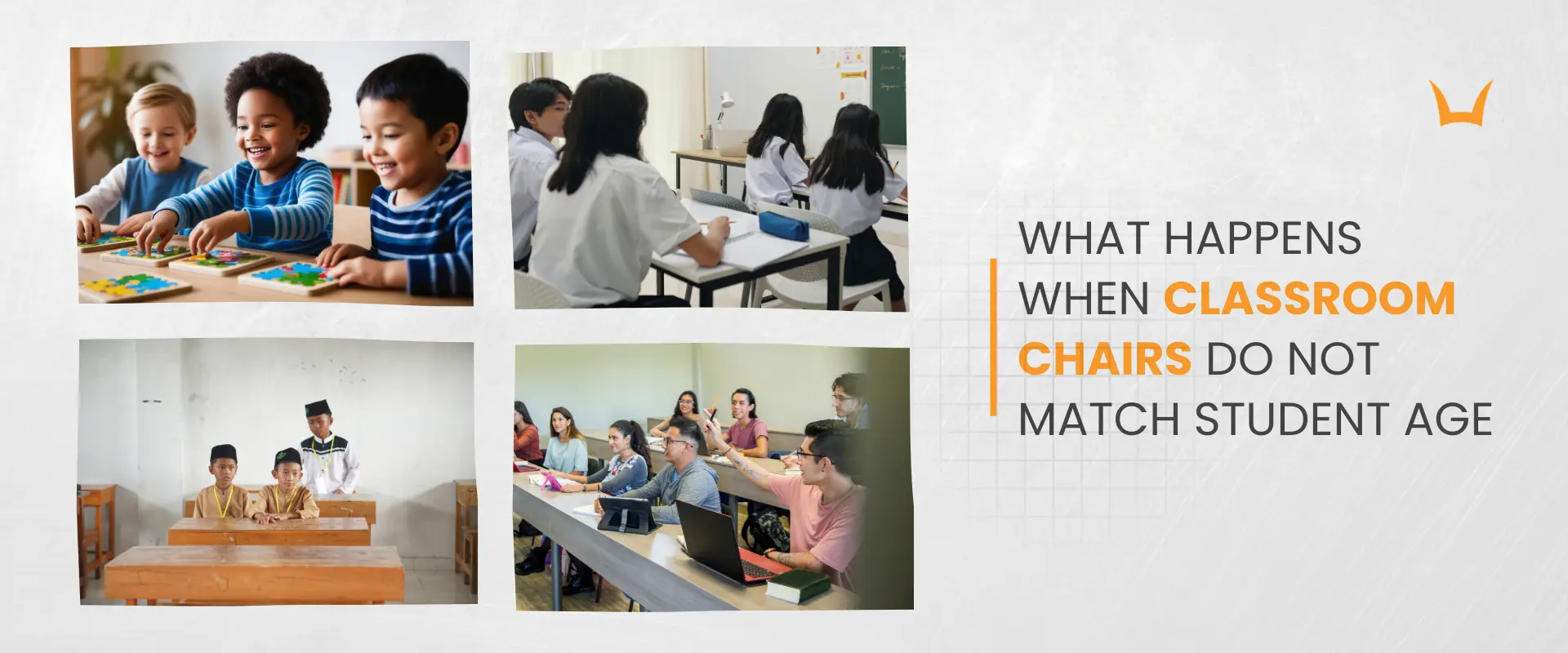
Walk into many Indian schools and you may find students from different classes sitting on chairs of similar sizes. However, a chair that suits a Class 1 student may not provide enough legroom or back support for someone in Class 10.
When classroom chairs do not match a student's height and body proportions, everyday activities like reading and writing can become uncomfortable. Younger children may struggle to rest their feet on the floor, while taller students may find the seat too small or lack enough space for their legs.
Choosing the right classroom chair size helps schools provide suitable seating for different student groups, rather than expecting one chair size to work for everyone.
Why Classroom Chair Height by Age Matters
Children grow considerably during their school years. Their legs become longer, shoulders broaden, and the distance they can comfortably reach across a desk changes.
However, age alone cannot determine the correct student chair height. Two students in the same class may differ significantly in height.
Schools should consider each student's height and body proportions when selecting a chair. A well-fitting chair allows students to rest their feet on the floor, use the backrest and reach the desk without unnecessary stretching.
What Happens When Classroom Chairs Are Too High or Too Low?
When a chair is too high, a student's feet may hang above the floor. The front edge of the seat can press beneath the thighs, making it difficult to sit comfortably.
Some children compensate by sliding forward, which prevents them from using the backrest properly. Others may repeatedly change their sitting position.
A chair that is too low creates different difficulties. Taller students may sit with their knees raised or push their legs forward to find enough room.
These seating difficulties can also affect students during lessons, as uncomfortable sitting positions may make it harder to maintain attention. Poor classroom seating and student learning are therefore closely connected.
Seat design also matters. A rounded or waterfall front edge can reduce concentrated pressure beneath the thighs, although it cannot correct a chair that is fundamentally the wrong size.
Classroom Chair Size Chart for Different School Grades
Schools can use grade-wise furniture measurements when planning classroom seating. Syona Roots offers four Eris chair and table combinations for different school sections. Schools planning furniture for multiple grade levels should consider classroom chairs for schools and colleges that accommodate different student groups.
| Classes | Syona Product | Chair Dimensions (mm) | Table Height |
|---|---|---|---|
| 1–2 | Eris Type A | 390 × 450 × 630 | 660 mm |
| 3–5 | Eris Type A+ | 390 × 450 × 630 | 660 mm |
| 6–9 | Eris Type B | 437 × 504 × 750 | 712 mm |
| 10 and above | Eris Type C | 437 × 504 × 780 | 782 mm |
Chair dimensions are length × width × overall height, not seat height. These figures are from Syona's product specifications and are not universal sizing standards.
Classroom Chairs for Classes 1–2
In early primary classes, students frequently move between handwriting, drawing, reading and other desk activities. A chair that is too deep may cause a smaller child to sit forward, leaving the back unsupported.
The front edge of the seat is particularly important for younger children because their shorter legs may not extend comfortably beyond a deep seat.
Syona's Eris Type A is listed for Classes 1–2. It features a waterfall seat design, a perforated backrest and glide feet that allow the chair to move across the classroom floor.
Classroom Chairs for Classes 3–5
By upper primary school, students generally spend more time on written exercises, worksheets and textbook activities. The chair must allow them to sit back while keeping their arms comfortably positioned for writing.
Schools should check whether students can sit against the backrest while reaching the desk comfortably. An appropriate seat depth helps students maintain this position without sitting too far forward.
Syona's Eris Type A+ is listed for Classes 3–5. Its design focuses on back support and seating comfort, with a study table intended for classroom use.
Classroom Chairs for Classes 6–9
Students in middle school may experience rapid growth, and height differences within the same class can become more noticeable.
Alongside chair height, schools should assess whether students have enough space to move their knees and reposition their legs during longer lessons.
Syona's Eris Type B is listed for Classes 6–9. It pairs a classroom chair with an MDF laminated study table, providing a furniture combination for this school section.
Classroom Chairs for Class 10 and Above
Secondary school students often spend extended periods working with textbooks, notebooks and examination materials. They need a writing surface with enough room for these items, along with comfortable access to the desk.
For older students, seat depth and knee clearance deserve attention because a chair that is too small can restrict leg movement.
Syona's Eris Type C is listed for Class 10 and above. It includes a perforated backrest, a table book rack for learning materials and a level adjuster that helps maintain stability on uneven floors.
How to Check Classroom Chair Dimensions Before Selection
The overall height of a chair does not tell schools whether its seat will fit a particular student. Several measurements should be checked.
- Seat height: The distance from the floor to the seat surface, which determines whether the feet can rest comfortably on the floor.
- Seat depth: The distance from the front to the back of the seat, which affects thigh support and backrest access.
- Seat width: The available sitting space, which should not restrict movement.
- Backrest height: The position of the backrest in relation to the student's back.
When comparing school chair dimensions, schools should distinguish between overall height and classroom chair seat height. A chair's total height includes its backrest and should not be used as a substitute for the actual seat measurement.
Beyond measurements, the seat shape and backrest design also influence how students sit throughout the school day. Classroom chair design and student posture should therefore be considered together.
Why School Desk and Chair Height Must Match
Even a correctly sized chair may feel uncomfortable when paired with the wrong desk.
A desk that is too high may cause students to raise their shoulders while writing. A low desk can encourage them to bend forward or lower their heads towards their books.
Suitable school desk and chair sizes should allow students to sit with supported feet while keeping their forearms comfortably positioned at the writing surface.
Schools should also examine school desk dimensions, especially the space beneath the tabletop. Students need sufficient clearance for their knees and thighs without moving their chairs too far away.
How Can Schools Check Whether a Chair Fits?
Before selecting furniture for an entire classroom, schools can test a chair with students of different heights.
Ask each student to sit normally and check whether:
- Both feet rest comfortably on the floor.
- The back can reach the backrest without sliding forward.
- The seat edge leaves space behind the knees.
- The legs fit beneath the desk.
- Writing is possible without lifting the shoulders or leaning excessively forward.
Where students have substantially different heights, schools may consider more than one fixed chair size or adjustable classroom chairs.
Choosing Classroom Furniture That Matches Student Growth
A single chair size cannot be expected to suit every student from primary through secondary school. Schools should review seating requirements as students progress through different classes, considering chair fit, desk compatibility and everyday classroom activities.
When selecting furniture for different grade levels, schools should compare classroom chair manufacturers and suppliers based on their available designs, dimensions and suitability for regular classroom use.
Syona Roots offers grade-specific Eris classroom chair and table combinations for Classes 1–2, 3–5, 6–9 and Class 10 onwards. Explore the Syona classroom furniture collection to compare the available options for your school.
Does Your Classroom Furniture Match the Age Groups Using It?
Syona Roots offers Eris classroom chair and table combinations in four variants: Type A, Type A+, Type B and Type C. Each model is intended for specific school grade groups, from early primary classes to secondary education.
Schools can explore the Syona classroom furniture collection to compare the available models and their specifications for different classroom requirements.