


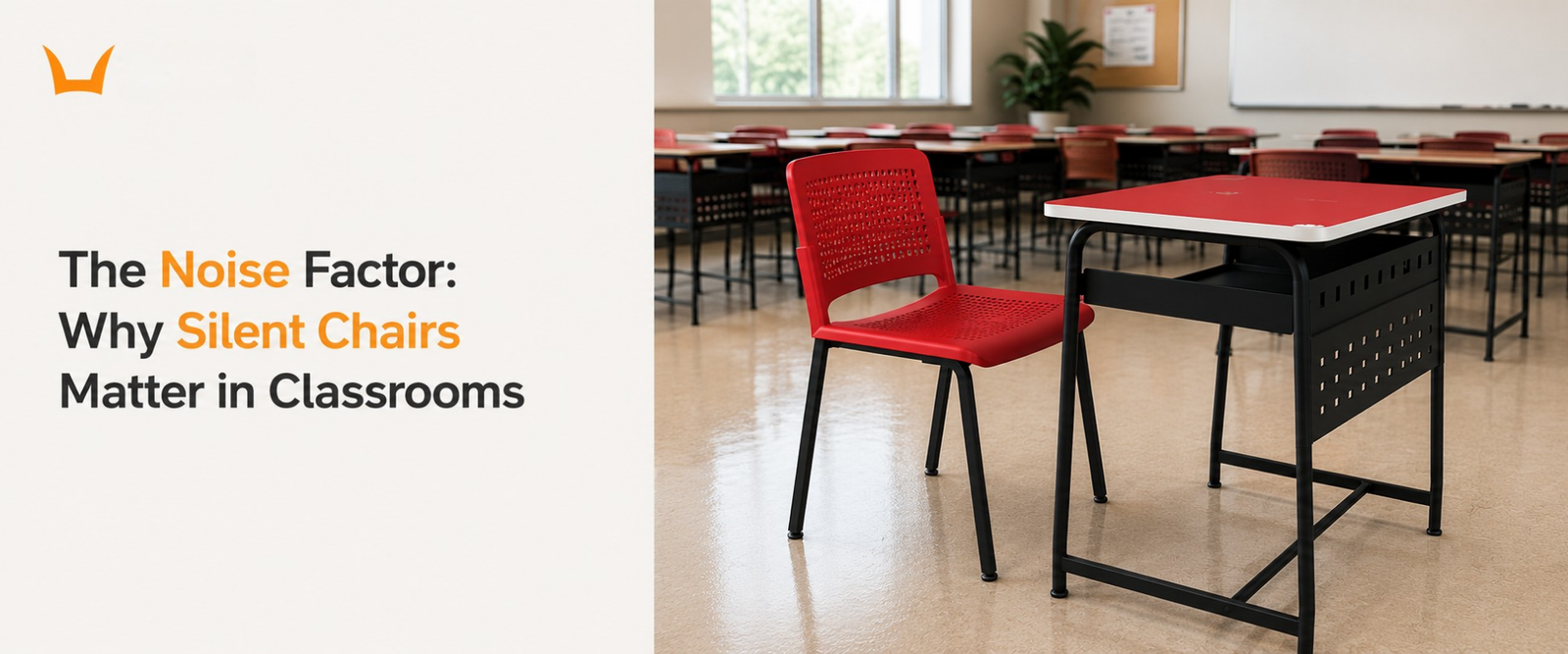
The Noise Factor: Why Silent Chairs Matter in Classrooms
- How Chairs Create Classroom Noise Disruption
- The Hidden Cost of Noisy Classroom Chairs
- Breaking Student Concentration
- Creating Stressful Learning Environments
- Silent Chair Features That Make a Difference
- Quiet Glides and Leg Tips
- Smooth Movement Mechanisms
- Sound Absorbing Materials
- Simple Solutions for Quieter Classrooms
- Why Silent Chairs Outperform Acoustic Panels for Chair Noise
TLDR
- Chair movement creates constant noise disruption that breaks student concentration
- Scraping, dragging, and sudden movements from chairs interrupt lessons throughout the day
- Silent chair features like felt glides and smooth mechanisms dramatically reduce classroom noise
- Quiet chairs improve focus, reduce teacher stress, and create better learning environments
- Choosing noise reducing classroom chairs is a simple yet powerful acoustic improvement
Introduction
Scrape. Drag. Bang. The sounds never stop. Every few minutes, another chair moves across the floor. Students shift positions. They reach for supplies. They turn to talk to classmates.
Each movement creates noise that breaks concentration. Teachers pause mid sentence. Students lose their train of thought. Learning stops while everyone refocuses.
Most schools spend thousands on acoustic panels. But they miss the biggest noise source. The chairs themselves create more daily disruption than any other classroom element. Choosing the right student furniture from the start is one of the simplest ways to reduce this problem.
How Chairs Create Classroom Noise Disruption
Classroom chairs move constantly. Students adjust their seating dozens of times each day. They scoot closer to desks. They turn to see the board. They lean back during discussions.
Every movement creates sound. Hard plastic legs scrape across floors. Metal components clang together. Chairs tip forward with sudden bangs. These sounds multiply across thirty students.
The noise compounds throughout the day. Morning arrivals bring chair dragging. Lesson transitions mean massive movement. Group work creates constant shuffling.
Teachers fight this noise constantly. They raise their voices over scraping sounds. They stop lessons to wait for quiet. They develop strategies to minimize chair movement.
The Hidden Cost of Noisy Classroom Chairs
Breaking Student Concentration
Sudden chair noises shatter focus instantly. A student deep in reading jumps when a nearby chair scrapes loudly. Mathematical thinking stops when dragging sounds interrupt problem solving.
Research shows it takes several minutes to regain concentration after interruption. Multiply this across dozens of daily chair noises. Students spend significant time refocusing instead of learning.
Young learners struggle most with noise disruption.Children at an early learning stage may struggle to concentrate when there is too much surrounding noise.
Interrupting Teaching Flow
Experienced teachers know the rhythm of effective lessons. They build momentum through careful pacing. They create engagement through strategic interaction.
Chair noise destroys this flow. Teachers stop mid explanation when loud scraping drowns out their words. They wait for shuffling sounds to end before continuing important points.
Lesson effectiveness drops when noise interrupts teaching. Information gets lost. Student engagement decreases.
Creating Stressful Learning Environments
Constant noise creates underlying tension in classrooms. Students feel on edge from unpredictable sounds. Teachers experience stress from fighting background noise.
This tension affects learning quality. Stressed students retain information poorly. Anxious teachers deliver less effective instruction. The entire classroom atmosphere suffers.
Quiet environments feel calmer and more focused. Students relax into deeper learning. Teachers communicate more effectively.
Silent Chair Features That Make a Difference
Quiet Glides and Leg Tips
Chair legs create most classroom noise. Hard plastic or metal touching hard floors produces harsh scraping sounds. The solution lies in proper leg protection.
Felt glides eliminate scraping completely. Soft materials slide smoothly without noise. Chair movement becomes nearly silent. Students can adjust positions without disrupting others.
Rubber tips work well on many surfaces. They grip floors gently while moving quietly. Quality glides last long under heavy classroom use.
Smooth Movement Mechanisms
Well engineered chairs move naturally without binding or catching. Smooth joints prevent sudden jerky motions that create noise. Quality construction ensures quiet operation throughout the chair's life.
Swivel mechanisms should operate silently. Adjustment features must work smoothly. Any moving parts need proper engineering to prevent noise generation. stable classroom seating also reduces sudden shifting and unnecessary movement that often creates extra classroom noise during lessons.
Simple designs often work best for noise reduction. Fewer moving parts mean fewer potential noise sources.
Sound Absorbing Materials
Chair materials affect noise production significantly. Hard surfaces reflect sound and create echoes. Softer materials absorb vibrations and reduce noise transmission.
Molded seats with slight flexibility reduce impact noise. Textured surfaces break up sound waves. Thoughtful material selection minimizes both direct noise and sound reflection.
Some chair manufacturers engineer chairs specifically for noise reduction. They test materials for acoustic properties. They design shapes that naturally dampen sound.
Simple Solutions for Quieter Classrooms
The easiest solution is choosing quiet chairs from the start. Look for built in noise reducing features. Invest in quality construction that maintains quiet operation over time.
For existing noisy chairs, retrofitting helps significantly. Add felt pads to chair legs. Replace worn glides with quality alternatives. Simple additions can dramatically reduce noise levels.
Train students in quiet chair movement. Teach them to lift slightly when moving chairs. Show proper techniques for position adjustments.
Establish movement protocols during lessons. Designate specific times for major position changes. Minimize unnecessary chair movement during instruction.
Why Silent Chairs Outperform Acoustic Panels for Chair Noise
Acoustic panels treat sound after it occurs. They absorb noise that has already disrupted the classroom. This reactive approach cannot prevent the initial concentration break.
Silent chairs eliminate noise at the source. They prevent disruptive sounds from occurring. This proactive approach maintains focus rather than trying to recover it.
Cost effectiveness favors silent chairs strongly. Quality acoustic treatments cost significantly more than quiet chair features. Schools get better results for less investment.
Installation simplicity makes chairs the obvious choice. Acoustic panels require professional installation and room modification. Silent chairs work immediately without construction or setup.
Conclusion
Classroom noise disrupts learning constantly. Most schools attack this problem with expensive acoustic treatments. But the simplest solution sits right under students.
Silent chairs eliminate the primary source of classroom noise disruption. Quiet movement preserves concentration and maintains teaching flow.
Schools seeking better acoustics should start with their seating. Quiet chairs deliver immediate results at reasonable cost.
Syona manufactures durable and comfortable classroom chairs designed for modern learning environments. Built for everyday academic use, Syona classroom chairs support better seating comfort, stability, and long-term performance for schools, colleges, and educational institutions.
Create Quieter and More Focused Learning Environments
A quieter classroom helps students concentrate better, supports smoother teaching, and creates a calmer learning atmosphere throughout the day. Reducing chair noise may seem like a small change, but it can make a major difference in classroom focus and overall learning quality. Because apparently the soundtrack of education does not need to be thirty chairs aggressively fighting the floor every eight seconds.
Explore durable and classroom friendly seating solutions at Syona Roots designed for comfort, stability, and everyday academic use across modern educational environments.