


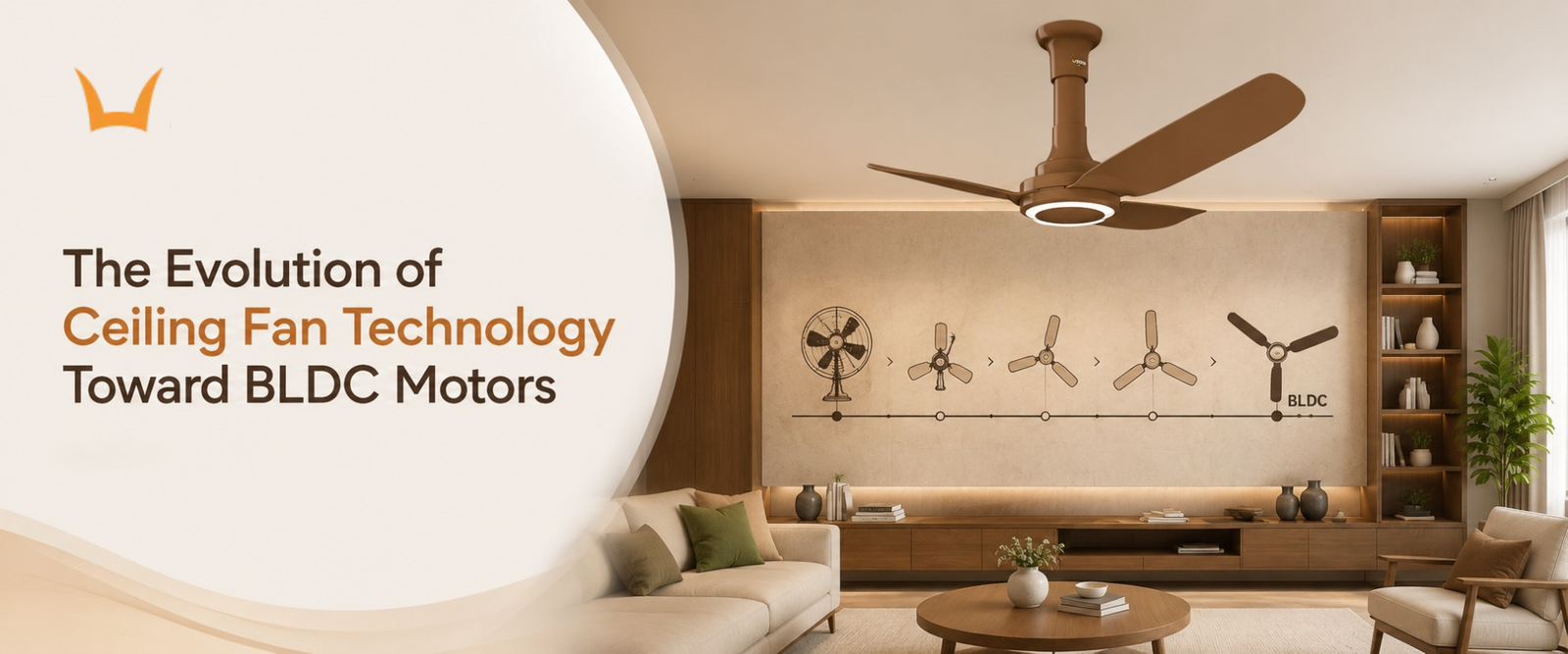
The Evolution of Ceiling Fan Technology Toward BLDC Motors
- The Beginning: Where Ceiling Fans Started
- The Long Reign of the Induction Motor Era
- When the World Demanded Better
- The Arrival of BLDC Motor Technology
- Why Adoption Was Slower Than Expected
- How Ceiling Fan Design Evolved Alongside the Motor
- The Future: Where Ceiling Fan Technology Is Heading
TLDR
- Ceiling fans began as steam powered units
- AC induction motors ruled for a century
- Energy crisis pushed for better designs
- BLDC motors changed the game entirely
- The future points toward smarter cooling
Introduction
Most people see a ceiling fan and think of it as a simple appliance. Switch on, switch off. Hot day, cool air.
But the ceiling fan has gone through more than a century of changes to reach the shape we know today. As a BLDC fan manufacturer that has watched this industry closely, we at Syona Roots have seen how each step in this journey solved a real problem of its time.
This blog walks through the full ceiling fan technology evolution, from the very first models to today's BLDC powered units, and looks ahead at what comes next.
The Beginning: Where Ceiling Fans Started
The earliest ceiling fans had nothing to do with electricity. They were mechanical, powered by water turbines or steam engines that turned belts connected to blades hanging from the ceiling. Whole rooms of fans in factories ran on a single belt system.
Comfort was not the goal. The aim was to keep workers cool enough to stay productive in hot mills and workshops. The design was crude. The maintenance was constant. The technology was limited but it solved a real problem.
Then came electricity. By the late 1800s, the first electrically powered ceiling fans started appearing in homes and offices. This was the first real turning point in ceiling fan history.
The Long Reign of the Induction Motor Era
For nearly a century, ceiling fans ran on alternating current induction motors. The design was simple. AC power created a rotating magnetic field. This field pulled the rotor along, which turned the blades and pushed air down.
The motor was reliable, cheap, and easy to manufacture. Every country built its own version with local adjustments. Spare parts were available anywhere. Any electrician could repair them with basic tools.
For homes and offices, the technology felt complete. There was no real reason to change it. Generations of buyers grew up with the same kind of fan, the same kind of speed knob, and the same kind of hum.
But by the late 1900s, the limits started showing. Induction motors waste a lot of energy as heat. The speed regulation through wall regulators drops voltage instead of saving power, which makes lower speeds less efficient than expected. In hot countries where fans run for many hours daily, this inefficiency added up to large electricity bills.
When the World Demanded Better
The global push for energy efficiency in the early 2000s changed many appliances. Refrigerators got smarter. Air conditioners got inverter technology. Lighting moved from incandescent to LED.
Ceiling fans stayed behind. Manufacturers focused on design tweaks and decorative finishes instead of motor upgrades. For decades, the basic motor stayed almost unchanged.
But pressure built from three directions. Governments started introducing star ratings for fans. Electricity rates kept rising. Customers in growing markets started asking why their fan still pulled the same wattage their grandfather's fan used.
Syona Roots began developing its BLDC ceiling fan range in 2021 to meet the growing demand for energy-efficient cooling solutions. Following years of research, engineering, and product development, the range was officially launched in August 2025, combining advanced motor technology with energy efficiency, reliable performance, and modern design.
The Arrival of BLDC Motor Technology
The brushless direct current motor was the answer. It had been used in other industries for years. Bringing it into ceiling fans was the leap that the appliance had been waiting for.
The biggest gain was efficiency. The same cooling could now be delivered with much less power. The motor produced less heat, less noise, and almost no friction inside the housing. Maintenance dropped. Lifespan increased.
The second gain was control. Speed could now be adjusted with electronic precision instead of voltage tricks. Remotes, timers, and sleep modes became standard, and models with built-in lighting combined cooling and light in one smart appliance.
The third gain was durability. BLDC technology supports reliable long-term performance and durable construction.
These three together are why we at Syona Roots chose to focus our entire fan range on BLDC technology. The advantages were too clear to ignore.
Why Adoption Was Slower Than Expected
Despite the clear advantages, BLDC fans took years to gain ground.
The first units carried a higher price tag. Many buyers stuck with familiar brands and traditional designs. Awareness about the running cost benefits was low. Many electricians were unfamiliar with the new technology and gave wrong advice during the early years.
As manufacturers, we saw this hesitation firsthand. Customers often asked the same questions about wiring, warranty, and reliability before making the switch. Over time, as awareness grew and electricity costs kept rising, the comparison became easier to make.
Today, BLDC fans are no longer the premium choice. They are quickly becoming the default in new home construction and office upgrades.
How Ceiling Fan Design Evolved Alongside the Motor
The motor was not the only thing changing. Ceiling fan design also went through its own evolution.
Early fans had heavy metal blades and bulky housings. Over time, blades became thinner, lighter, and more aerodynamic. Aluminium and engineered plastics replaced raw metal. Blade pitch was studied scientifically to maximise airflow at lower energy use, though the effect of ceiling height also shapes the final result.
Aesthetics also kept up with the times. Wooden finishes, brushed metal looks, minimalist canopies, and smart colour options entered the market. The ceiling fan stopped being just functional and started playing a role in interior design.
At Syona Roots, our design team applies this same thinking to every model we build. The fan should match the room it serves, not just hang from the ceiling. Our BLDC range combines modern motor performance with clean aesthetics that suit today's home and office interiors.
The Future: Where Ceiling Fan Technology Is Heading
The next phase is already taking shape.
Sensor based fans that adjust speed based on room temperature and humidity are entering the market. Some models now connect to smart home systems and respond to voice commands or app inputs. Solar compatible fans are growing in popularity in regions with frequent power cuts.
Future designs are also looking at noise reduction, ultra slim profiles, and motor lifespans that stretch even further than current BLDC units. The integration of AI to predict cooling needs based on user habits is already in early research.
As a manufacturer, we are actively studying these developments and exploring how they fit into the next generation of Syona Roots fans. The journey is far from over.
Conclusion
The ceiling fan technology evolution tells a story of slow change followed by sharp breakthroughs. From belt driven blades to BLDC powered units, the journey has been long but useful at every step.
BLDC motors are the most important shift in ceiling fan history in over a century. They cut energy use, improve performance, and open the door to the smarter fans coming next.
At Syona Roots, we have built our entire fan range around this technology because we believe in giving customers a product that reflects where the industry is heading, not where it has been.
Ready to bring a Syona Roots BLDC fan into your home or office?
The evolution of ceiling fan technology shows that innovation is driven by efficiency, reliability and user comfort. Investing in a modern BLDC ceiling fan means choosing a solution designed to meet today's energy-saving expectations while supporting long-term performance. Explore the Syona Roots range to find a fan that combines advanced engineering, contemporary styling and dependable everyday cooling for homes, offices and commercial spaces.