


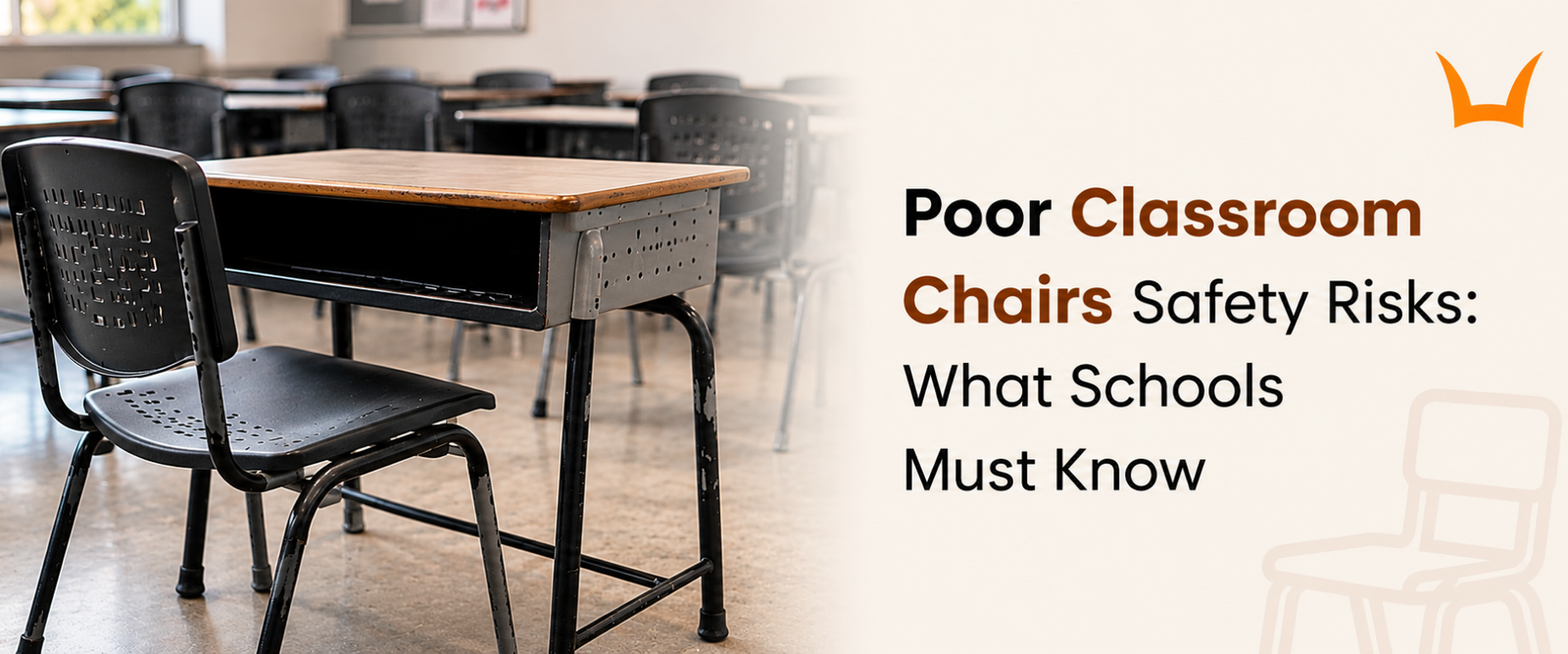
Poor Classroom Chairs Safety Risks: What Schools Must Know
- Why Classroom Furniture Safety Matters in Schools and Colleges
- Common Safety Risks of Poor Classroom Chairs in Schools
- Are School Chairs Bad for Your Back? Posture and Comfort Risks
- Warning Signs of an Unsafe Classroom Chair
- The Hidden Risks of Ignoring Classroom Chair Safety
- Why Does My Classroom Furniture Keep Getting Damaged So Quickly?
Introduction
Most schools focus on books, boards, and technology when planning a classroom. Chairs often come last on the list, even though every student uses them daily for hours.
Poor-quality chairs may look fine initially, but weak frames, loose joints, and damaged surfaces can create safety risks. Schools struggle with durable classroom furniture when frequent use, dragging, and unsuitable materials cause repeated damage and replacement costs.
This blog explains the main risks and how choosing safer student seating for schools and colleges helps create a safer learning environment.
Why Classroom Furniture Safety Matters in Schools and Colleges
School chair safety depends on stable construction, suitable sizing and regular inspections. Students sit, lean, shift their weight and move chairs throughout the school day, so classroom furniture must withstand regular use without becoming unstable or damaged.
Furniture safety standards for schools and colleges should be considered when selecting classroom chairs. Schools should check applicable safety requirements, structural strength, stability, appropriate sizing, and manufacturer documentation. Any claimed certification should be verified before purchase.
Common Safety Risks of Poor Classroom Chairs in Schools
Weak Frames, Loose Joints and Broken Classroom Chairs
Low-quality chairs may have weak frames or poorly secured joints that deteriorate with repeated use. A broken classroom chair can collapse suddenly, causing students to fall and sustain injuries. Regular inspections of frames, joints, and fasteners help identify structural damage before a chair becomes unsafe.
Tipping and Stability Problems
Unstable classroom seating can increase the risk of tipping and falls, particularly when chairs have uneven legs, unstable bases or loose connections. Schools should choose stable designs suited to the intended age group and remove chairs that wobble or tilt during normal use.
Sharp Edges and Pinch Points
Poorly finished chairs may have sharp corners, exposed bolts, or gaps that trap fingers. These defects can cause cuts, scratches, and pinching injuries. Damaged edges and exposed components should be addressed before the chair returns to use.
School Chair Materials and Durability
What are school chairs made of ? School chairs are commonly made from plastic, metal, wood or combinations of these materials. Their durability depends on material quality, construction and the strength of their connections. Schools should select materials suited to regular classroom use and inspect furniture for deterioration.
Worn Out Padding and Surfaces
Cracked plastic, torn padding, splintered wood and damaged seat surfaces can cause discomfort, scratches and difficulty sitting comfortably. Schools should repair or replace chairs when surface damage makes them unsuitable or unsafe for use.
Wrong Weight Capacity
Chairs that are not built for school level use can buckle under pressure. Older students or repeated use can quickly push a low capacity chair past its limit, leading to sudden breakage.
Posture and Long Term Health Damage
Even if a poor chair does not break, it can hurt students slowly. Bad shape, low back support, and wrong height force students into unhealthy postures. This leads to back pain, neck strain, and tiredness that affects focus and learning.
Are School Chairs Bad for Your Back? Posture and Comfort Risks
They can be, when the chair doesn’t match the student’s body. A seat that is too high, too low, or too deep changes how a student sits for hours each day, and a backrest that sits in the wrong place offers little real support.
Why are school chairs so uncomfortable? Most of the time it is a sizing problem rather than a quality problem. A single chair size is often used for students of very different ages and heights, so many children end up sitting on furniture that was never meant for them.
How can you tell if a chair fits a student? A quick check works well:
- Feet rest flat on the floor.
- Knees are bent at roughly a right angle.
- There is a small gap between the back of the knees and the seat edge.
- The lower back touches the backrest.
- Elbows rest comfortably at desk height.
Are school chairs designed to be uncomfortable? No. Discomfort usually comes from a mismatch between chair, desk, and student. Schools should choose chairs suited to each age group and desk height, and offer more than one size where students vary widely.
Warning Signs of an Unsafe Classroom Chair
Schools should regularly check classroom chairs for early signs of damage, including:
- Wobbling legs or loose joints
- Cracked plastic or splintered wood
- Rust on metal frames
- Sharp or rough edges
- Bent or uneven bases
- Torn or flattened padding
- Squeaks or creaks under normal use
- Exposed or protruding screws
Chair caution: Broken chairs in school classrooms should be removed from use until they have been assessed and safely repaired or replaced. Even minor-looking damage can affect stability or expose students to sharp components.
The Hidden Risks of Ignoring Classroom Chair Safety
Unsafe classroom chairs do more than hurt students. They put the whole school at risk in many ways.
A single injury can lead to medical bills, parent complaints, and even legal action. Schools may be held responsible for using furniture that did not meet safety standards. Word spreads quickly, and the school's reputation can take a hit that lasts for years.
There is also the daily impact on learning. Students sitting in painful or shaky chairs cannot focus. They get tired, lose interest, and miss important lessons. Over time, this affects results, attendance, and overall student well-being. This becomes even more noticeable when schools use ordinary furniture instead of classroom chairs designed for regular school use, which need to meet different requirements from chairs intended for home use.
Why Does My Classroom Furniture Keep Getting Damaged So Quickly?
Classroom furniture usually wears out fast because of low-quality materials, the wrong size or load capacity, heavy daily use, and missed inspections. Schools can reduce classroom chair hazards through careful selection and regular maintenance.
- Choose chairs from trusted classroom furniture suppliers.
- Check applicable safety requirements and verify claimed certifications.
- Match chair sizes to students' age groups and desk heights.
- Confirm the manufacturer's stated load capacity.
- Inspect frames, joints, fasteners, and surfaces regularly.
- Remove damaged or unstable chairs from use.
- Avoid dragging chairs unnecessarily and encourage proper use.
- Record inspection, repair, and replacement dates.
Schools should also plan classroom seating layouts carefully to maintain safe movement and adequate space between desks and chairs.
Conclusion
Classroom chairs may seem like a small detail, but their condition affects student safety and comfort. Weak frames, unstable bases, sharp edges, and unsuitable seating dimensions can create avoidable problems.
Selecting durable furniture, checking applicable safety requirements, and inspecting chairs regularly helps schools maintain safer classrooms. Investing in suitable classroom furniture supports everyday learning while reducing avoidable damage and replacement needs.
Worried About Classroom Chair Safety?
At Syona Roots, we manufacture purpose-built classroom seating designed for student safety, comfort, and long-lasting durability. From stable frames and rounded edges to classroom-ready materials, the right seating helps schools create a safer and more supportive learning environment for every student. Because children already invent enough chaos on their own without defective chairs joining the activity.