


How Waiting Chair Layout Affects Patient Movement and Flow
- Your Waiting Area Is a Movement Corridor, Not Just a Seating Zone
- Small Placement Mistakes Create Big Problems at Peak Hours
- Why Loose Chairs Ruin a Well Planned Layout
- Why Clear Walkways Are Essential for Patient Safety
- How Chair Spacing Affects Infection Control
- Why Different Hospital Zones Need Different Seating Layouts
- Why Layout Planning Should Come Before Choosing Chairs
Spend ten minutes in any busy Indian hospital and you will notice something interesting.
Some hospitals feel calm even when they are full. Patients know where to sit. Staff move freely. Queues form on their own. The space just works.
Other hospitals feel chaotic even when they are half empty. People stand in corridors. Staff squeeze past chairs to do their job. Nobody knows where the queue starts.
Both hospitals can have the same number of chairs. The difference is almost always the layout.
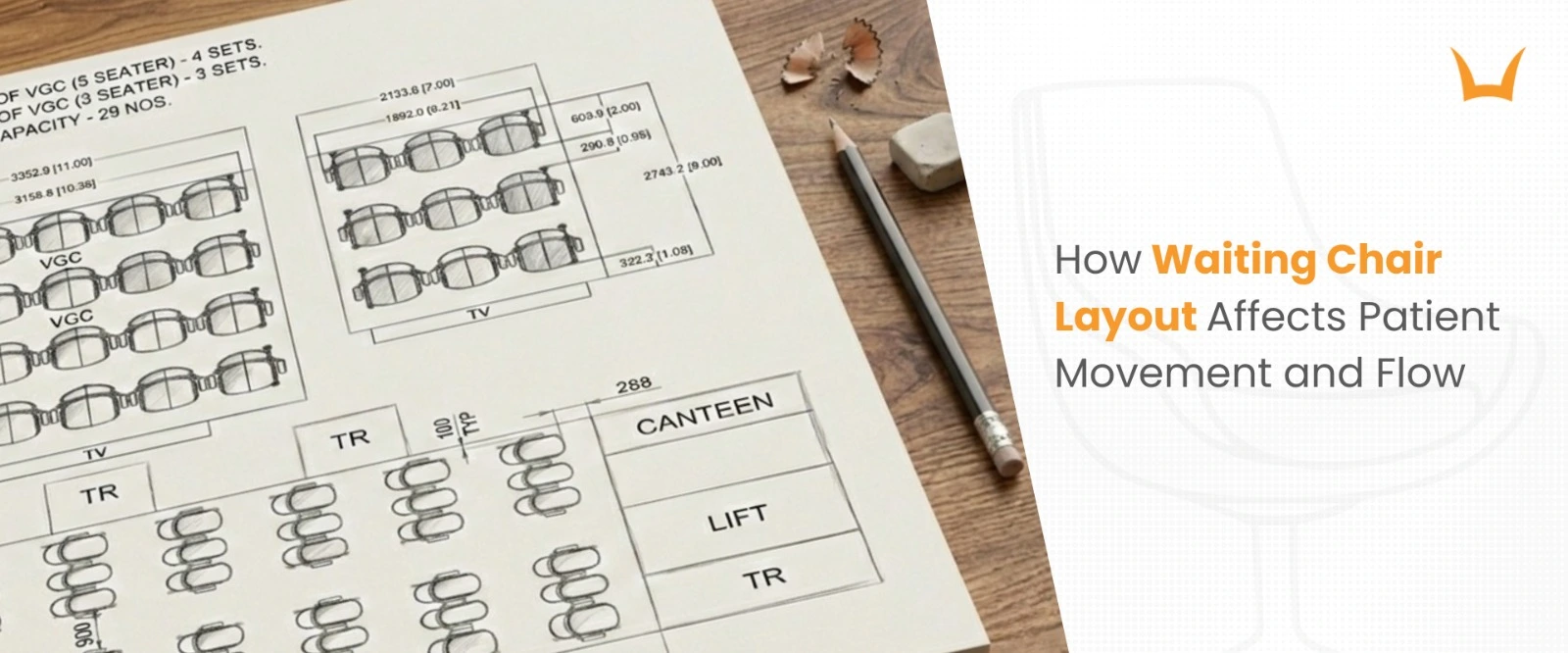
How you arrange your waiting chairs shapes everything from patient movement to staff efficiency to emergency access.
This is something most facility managers do not think about when planning a waiting area. They focus on how many chairs they need. They should be thinking about where those chairs go and what movement looks like once they are placed.
1. Your Waiting Area Is a Movement Corridor, Not Just a Seating Zone
This is the most important thing to understand about any healthcare waiting area.
People are not just sitting there. They are arriving, registering, checking token numbers, going to the bathroom and walking to the doctor's room. Attendants are moving with them. Staff are crossing through the same space all day.
Every row of chairs you place is a physical boundary that either supports or blocks movement through your facility.
If your layout was planned only around seating capacity and not around movement, your waiting area is probably making life harder than it needs to be.
Trace the movement paths first. Where do people come from? Where do they go? Build the seating around those answers.
2. Small Placement Mistakes Create Big Problems at Peak Hours
Most waiting area problems do not come from one big mistake. They come from several small ones.
Chairs placed too close to the registration counter force waiting patients to sit right in the walking path. Anyone going to the counter has to squeeze past people who are already seated.
Rows that face the main corridor instead of running alongside it create a wall of chairs that everyone must navigate around.
A chair pushed near a doorway without thinking about it reduces the effective entry width by half during the busiest part of the morning.
None of these feel like big decisions in the moment. But each one adds friction to every person moving through your facility every day.
Fix the placement and you fix the flow. No extra space needed, no extra budget. Just a clear movement plan before a single chair is placed.
3. Loose Chairs Will Always Ruin a Well-Planned Layout
Here is a problem that every facility manager will recognise immediately.
You set up a neat layout. Proper rows, good spacing, clear aisles. It looks exactly right.
A month later it looks nothing like what you planned.
Patients pull chairs toward family. They push them aside when standing. They drag them toward the token display. Nobody means harm but the layout disappears slowly.
Linked seating that connects 2, 4 or 6 chairs into a single unit solves this completely. The row stays where you placed it. The aisle stays open.
Beam seating mounted to the floor goes one step further. Nothing moves at all.
If your facility sees high footfall, fixed or linked seating is not an upgrade. It is the only practical choice. And not every chair is built to handle that level of daily use.
4. Clear Walkways Are a Patient Safety Requirement
In India, waiting areas are almost always packed to maximum capacity. Every available foot gets a chair. Empty space feels like wasted capacity.
But those open aisles are not empty. They are working hard every single day.
A wheelchair needs space to pass without the user asking seated patients to move. A stretcher being rushed to treatment needs a clear path immediately, not after someone shifts a chair.
If your walkways only work on a quiet day, they are not walkways. They are a safety risk you have not had to pay for yet.
Proper aisle clearance also does something else. When patients can see a clear path through the space, they naturally organise themselves into proper queues. No signs needed. No instruction needed. The layout itself does the work.
5. Tightly Packed Chairs Make Infection Control Much Harder
This is a point that became very visible after the pandemic but still gets ignored in most facility planning conversations.
When chairs are packed too closely, those surfaces get cleaned occasionally. And seated patients begin feeling the discomfort sooner than expected.
Housekeeping staff do their best. But reaching between tightly placed chairs while patients are seated is not practical. Those surfaces get cleaned occasionally, not with the frequency a healthcare facility actually needs.
Infection control in a waiting area is a layout problem as much as it is a cleaning protocol problem. Proper spacing between rows means every surface can be accessed and cleaned consistently.
Linked and modular seating with adequate aisle clearance makes consistent cleaning possible without disrupting patients.
6. Different Zones in a Hospital Need Different Layout Approaches
Not every waiting area in a hospital has the same job to do.
Your OPD waiting area handles large volumes across long hours. It needs high capacity rows, clear token display sightlines and wide aisles that handle constant movement.
Your pharmacy waiting zone is smaller. Seating just needs to keep patients clear of the dispensing counter.
Your emergency department is unpredictable. You may need to reconfigure quickly when volumes spike.
Modular seating lets you design each zone for its purpose. Gang seating configurations create clear zones within a large open space without walls or barriers.
Planning each zone separately makes a real difference to how your facility runs every day.
The Layout Has to Come Before the Chairs
Most hospital seating decisions in India follow the same order. Budget is decided. Chairs are ordered. Chairs arrive. Someone arranges them in whatever space is available.
That arrangement stays for years because changing it feels like too much effort.
But a waiting area planned around movement, with proper aisle widths, fixed or linked seating systems and zone-specific configurations, is not complicated to maintain. It runs itself.
Planning a Better Hospital Waiting Area?
Explore Syona waiting chair systems designed for hospitals, clinics and healthcare facilities. Our linked and modular seating solutions help improve patient flow, maintain clear walkways and support efficient facility layouts.