


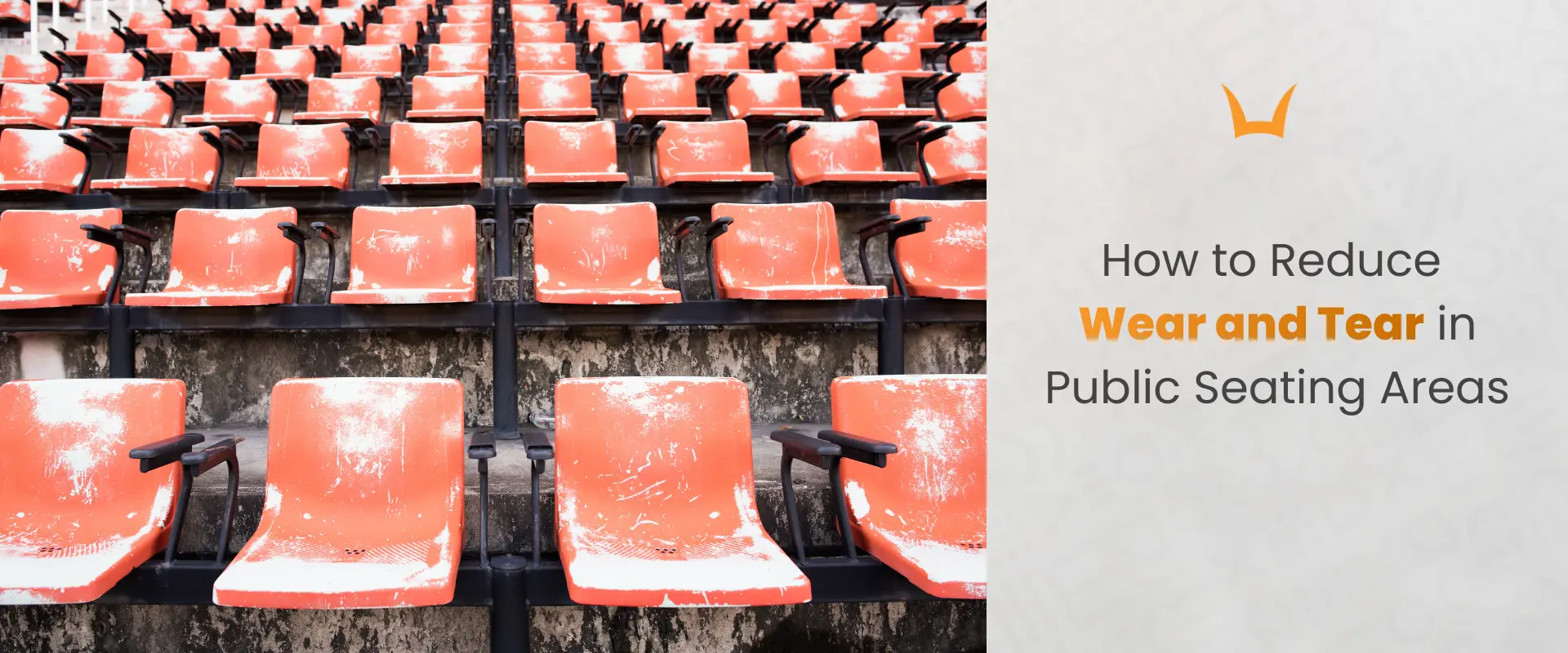
How to Reduce Wear and Tear in Public Seating Areas
- Why Public Seating Wears Out Faster Than You Expect
- Material Choice Is the Biggest Factor in How Long Seating Lasts
- Cushions and Upholstery Fail Faster Than the Frame
- Maintenance Habits That Slow Down Deterioration
- Budget Seating Is Not Saving. It Is a Deferred Expense.
- What to Look For When Buying Long-Lasting Public Seating
- Build a Waiting Area That Lasts. Not One That Needs Constant Attention.
For facility managers, procurement teams, corporate admin heads, school management and public infrastructure planners
Most facility managers are surprised by how quickly their waiting area chairs start showing damage.
New seating looks great on day one. Within a year, cushions are flattening. Joints are creaking. Fabric is tearing at the seams. And someone is already asking about replacements.
This is not bad luck. It is the predictable result of placing the wrong chairs in a high-use environment without a proper maintenance plan.
Public seating deteriorates faster than office furniture because it is used harder, cleaned more aggressively and expected to last just as long.
The good news is that most wear and tear is preventable. The right material choices, smarter maintenance and better procurement decisions can significantly extend the life of your seating and reduce the cost of keeping it functional.
Why Public Seating Wears Out Faster Than You Expect
A waiting area chair in a busy retail service centre or government office does not get a rest. It is in use from opening to closing. Different users, different weights, different levels of care.
Every interaction puts stress on the frame, joints, surface and padding. Multiplied across hundreds of uses a day over months and years, it becomes serious structural fatigue.
The problem is not that chairs wear out. It is that most chairs in public spaces were never built for this level of sustained use.
Material Choice Is the Biggest Factor in How Long Seating Lasts
Not all chair materials age the same way in commercial environments.
Steel frames are strong but require proper anti-rust treatment. Untreated steel corrodes in humid conditions, weakening joints and increasing maintenance cost rapidly.
Wood looks premium but absorbs moisture, scratches easily and chips at edges under daily use. In high-traffic spaces like college lobbies or retail centres, the polish wears off quickly and the surface becomes hard to maintain.
Standard plastic may seem low-maintenance but low-grade polymer bends under heavy loads, cracks at stress points and fades in sunlight. It deteriorates quickly in serious footfall environments.
The material that lasts longest in commercial use is not the most expensive one. It is the one engineered for sustained high-load use. Material choice is also what determines how safe the seating stays over time.
Engineering polymer and die-cast aluminium handle repetitive stress without losing structural integrity. They resist moisture and surface damage, cutting cleaning-related wear significantly.
Cushions and Upholstery Fail Faster Than the Frame
If your facility uses cushioned waiting chairs, this is the first place you will see deterioration.
Low-density foam compresses and loses shape within months. Once it starts flattening it does not recover. The seat develops visible dips, the front edge collapses and the chair looks worn out long before the frame has any problem.
Upholstery compounds the issue. Fabric absorbs spills, stains and odours that routine cleaning cannot remove. PU surfaces crack under repeated use and cleaning chemical exposure. Stitching at stress points fails under heavy users.
The chair may still be structurally sound underneath. But once the surface looks damaged, the whole unit gets replaced. That is an expensive outcome of an avoidable material decision.
Where possible, choose non-porous easy-clean surfaces over upholstered ones in high-use areas. Where cushioning is necessary, ensure the foam density is rated for commercial, not residential, use.
Maintenance Habits That Slow Down Deterioration
Most waiting area seating fails early because it is cleaned but not maintained. Cleaning removes surface dirt. Maintenance catches the structural issues cleaning does not reach.
Check joints every quarter. A loose joint tightened early stays functional for years. A loose joint ignored becomes a wobble, then a crack, then a chair that cannot be used.
Inspect upholstery monthly. A small tear caught early can be repaired. Left to open over weeks, moisture gets into the foam underneath and the chair needs full replacement.
Clean metal frames with products that do not strip protective coatings. Harsh chemicals accelerate powder coat damage, which leads directly to corrosion.
A ten-minute monthly check per row of seating can add years to the life of your chairs. It is the most cost-effective maintenance practice available.
Budget Seating Is Not Saving. It Is a Deferred Expense.
Most procurement teams do not run this calculation before placing an order.
A budget chair that costs half the price of a commercial-grade option often fails twice as fast, meaning it needs replacing sooner. Meanwhile, the commercial-grade reception chair is still in service.
Add the staff time managing damaged chairs. The disruption of a waiting area always short on working seats. The impression visitors form when seating looks worn and neglected.
And the cost most facilities overlook: when one chair in a linked row breaks, the whole row often comes out of service because a single replacement is unavailable.
Modular replacement options change this equation. When a single seat can be replaced without removing the entire row, the cost of wear and tear drops sharply over the life of the installation.
What to Look For When Buying Long-Lasting Public Seating
Run through these points before the next procurement decision.
- Frame construction: commercial grade steel with powder-coated or stainless finish. Not painted mild steel or chrome that will peel.
- Joint quality: welded and reinforced. Joints are the first failure point in high-use seating.
- Load rating: verified for commercial use, not just residential.
- Surface material: smooth, non-porous and resistant to the cleaning products your team uses.
- Foam specification if cushioned: high-density commercial foam, not standard residential padding.
- Modular design: individual seat units that can be swapped without removing the full row.
- Warranty: a multi-year manufacturer warranty reflects confidence in real-world performance.
A chair that ticks all of these costs more upfront. It costs far less over three to five years of real-world use.
Build a Waiting Area That Lasts. Not One That Needs Constant Attention.
Wear and tear in public seating is not inevitable. It is the result of under-specified chairs, inconsistent maintenance and procurement decisions made on upfront cost alone.
Facilities that get the most life from their waiting area seating treat it as an operational investment, not a furniture expense.
When waiting chairs are selected based on durability standards, material quality, structural integrity, and real-world usage conditions, they reduce breakdowns, complaints, and replacement cycles. They support smoother facility management and create an environment that feels organised, safe, and professionally managed.
Is Your Waiting Area Seating Built to Last?
High-traffic environments demand seating that can handle constant use without quickly showing damage. Choosing the right materials, strong frame construction and easy-to-maintain surfaces plays a major role in reducing wear and tear over time. Syona waiting chairs are designed specifically for demanding public and institutional spaces, combining durable engineering polymers, robust structural design and easy-clean surfaces to support long-term performance. For organisations looking to reduce maintenance issues and replacement cycles, investing in well-built seating solutions like Syona helps create waiting areas that remain reliable, organised and professional for years.