


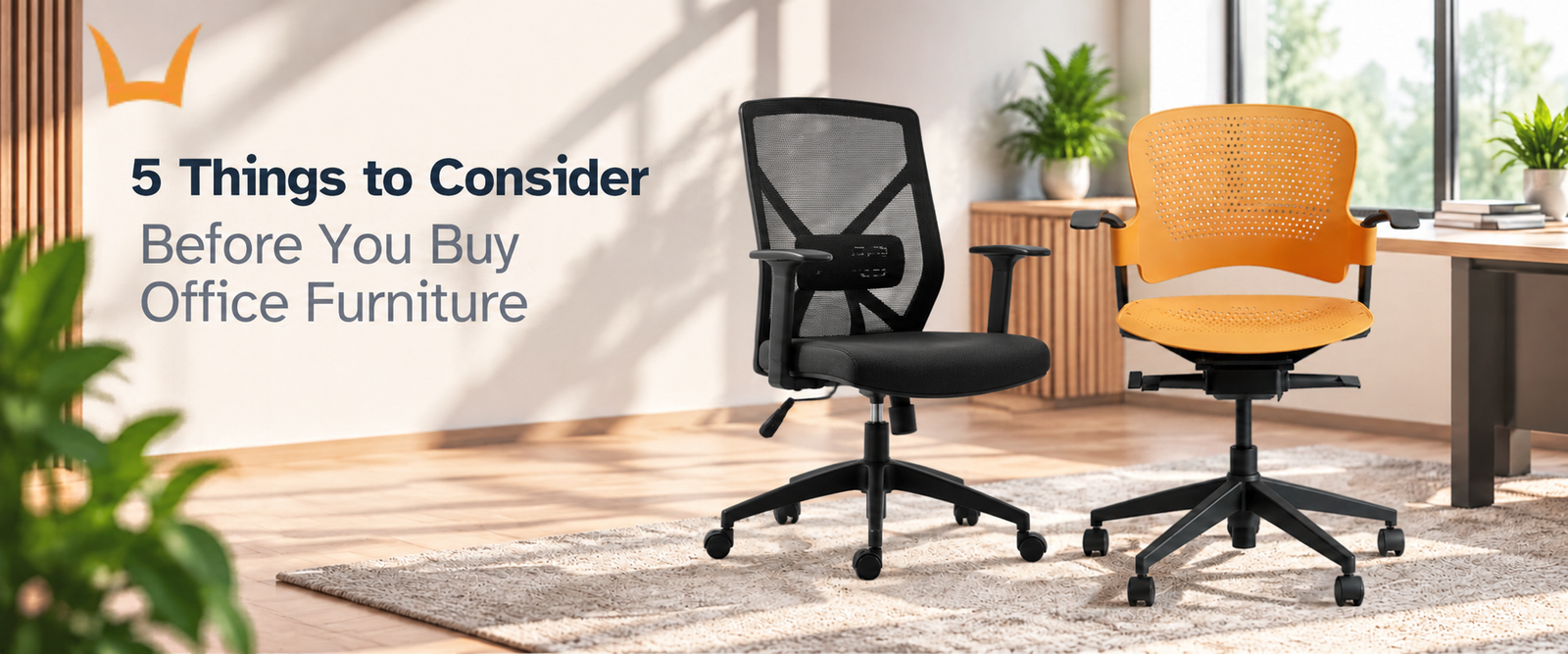
5 Things to Consider Before You Buy Office Furniture
- Decide What You Need Before Choosing What You Like
- Check the Space for Furniture Needs While Being Used
- Try the Chair and Desk Together
- Look Closely at Construction and Everyday Upkeep
- Compare the Complete Quote and Delivery Commitment
- Discuss Your Office Seating Requirements with Syona
office furniture is easy to choose in a photograph. The harder part is knowing whether it will work once the room is full, the desks are in use and the storage cabinets are open.
Before you buy office furniture, focus on five things: what your team needs, how the furniture fits the space, whether it feels comfortable, how well it is built and what the complete purchase includes.
Getting these decisions right helps you narrow the options before comparing colours and finishes. Here is how to approach each one.
1. Decide What You Need Before Choosing What You Like
Start with a list of the work your furniture needs to support. Desk work, visitor seating, meetings and document storage each call for different features. Buying the same furniture throughout an office may simplify ordering, but it can leave some areas poorly equipped.
Look at what you already own. Keep suitable pieces, identify anything that needs replacing and separate essential purchases from additions that can wait.
Your requirements list should record:
- The furniture needed in each area.
- How many people will use it at the busiest time.
- Equipment and materials that need space.
- Any confirmed changes in staffing or office use.
Count storage needs as carefully as seats. Files, personal belongings and shared supplies all need somewhere to go. Buying cabinets without checking their contents can leave you with shelves that are too shallow or drawers that cannot hold the required documents.
Give every item a purpose before giving it a place on the order.
This is also the stage to decide on an overall appearance. If you want to buy modern office furniture, choose a small set of compatible finishes. You can maintain a consistent look while selecting different pieces for different tasks.
2. Check the Space for furniture Needs While Being Used
A desk can fit against a wall and still leave too little room for its chair. A cabinet can fit into a corner but become awkward when its doors are open.
Measure the room, then plan for movement around each item. Include space for chairs to pull back, drawers to extend and people to reach shared equipment. A well-planned home office layout can help you make better use of the available space.
Mark the proposed positions on a floor plan. If you are unsure how crowded the arrangement will feel, use removable tape to outline the furniture on the floor.
Check the delivery route too. Door openings, stair turns and lifts can affect whether assembled furniture reaches the room. Ask whether large pieces arrive assembled or in sections.
Power access deserves attention before desks are positioned. Confirm where cables will run and whether sockets remain reachable once storage and workstations are installed.
Measure for use, not just placement.
For shared or accessible work areas, consider the needs of the people moving through them. A layout should allow users to approach and use the furniture comfortably, rather than simply accommodate the maximum number of desks.
3. Try the Chair and Desk Together
Comfort is difficult to judge from a product description. A chair may feel suitable on its own but work poorly with the desk you intend to use.
When considering how to buy office furniture, treat the workstation as a combination. Check the seat height against the work surface, the armrests against the desk edge and the available space underneath. The chair seat material and construction also affect how the chair feels during extended desk work.
The main things to look out for before buying an office chair are:
- A seat that allows supported feet and comfortable leg clearance.
- A backrest that supports you in your usual working position.
- Controls you can reach and understand.
- Armrests that let you approach the desk without raising your shoulders.
Try the chair while reaching towards a keyboard or writing surface. A quick sit may tell you about softness, but a working-position trial reveals more about fit. Official workstation guidance also recommends trying different chairs before purchasing and adjusting the chair alongside the desk and equipment.
For a team purchase, involve people of different heights and builds. Their feedback can show whether one model offers enough adjustment or whether a choice of seating is needed.
4. Look Closely at Construction and Everyday Upkeep
Furniture quality becomes clearer when you examine the parts you will touch and use repeatedly.
Open the drawers, check the handles and look along the edges of a desk. Ask the supplier to demonstrate moving components. For storage, confirm the shelf load limits and whether the unit needs securing during installation.
Material names alone do not explain the whole product. Ask what the main panels, frame and surface finish are made from, rather than relying on descriptions such as “premium quality.”
Request finish samples where available. Viewing them in your own office helps you assess colour, texture and how they look under the room’s lighting.
Cleaning is another practical consideration. Find out which products can be used on the surfaces and upholstery, particularly if your workplace follows a regular cleaning schedule.
Repairability matters as well. Ask whether castors, arm pads, drawer runners or other frequently used parts can be replaced separately.
These office furniture buying tips help you compare what you are purchasing beyond its appearance. A well-finished sample is useful; clear specifications and care information make the decision more informed.
5. Compare the Complete Quote and Delivery Commitment
The price beside a product may not cover everything required to put it into use.
Ask for an itemised quotation showing quantities, model references, selected finishes and included accessories. Check whether taxes, transport, assembly and packaging removal are included.
Compare suppliers using equivalent specifications. Differences in upholstery, storage fittings or adjustment features can explain why two similar-looking products have different prices.
Before paying a deposit, confirm:
- The expected delivery and installation dates.
- Payment stages and cancellation terms.
- The process for reporting damaged or incorrect items.
- Warranty coverage, exclusions and service arrangements.
A warranty period tells only part of the story. Find out which components it covers, who handles a claim and whether transport or labour charges apply.
For customised furniture, approve the dimensions and finishes in writing. Keep that approval with the quotation so both sides have a clear record of the order.
If you plan to purchase in stages, ask whether matching finishes and models are likely to remain available.
Discuss Your Office Seating Requirements with Syona
Syona offers office seating for different workplace requirements. Share your seating quantities, available space and preferred features with our office furniture suppliers to discuss suitable options. Confirm the specifications and terms for your selected models before ordering.
Conclusion
Before placing the order, make sure you can explain why each piece belongs in your office. A clear purpose, a workable layout, a comfortable fit and an agreed purchase specification make the final choice much easier.
Plan a Workspace That Works for Your Team
From individual workstations to shared office areas, the right seating can help create a more organised working environment. Connect with Syona to explore office chair options for your workplace and review the specifications before making your selection.