


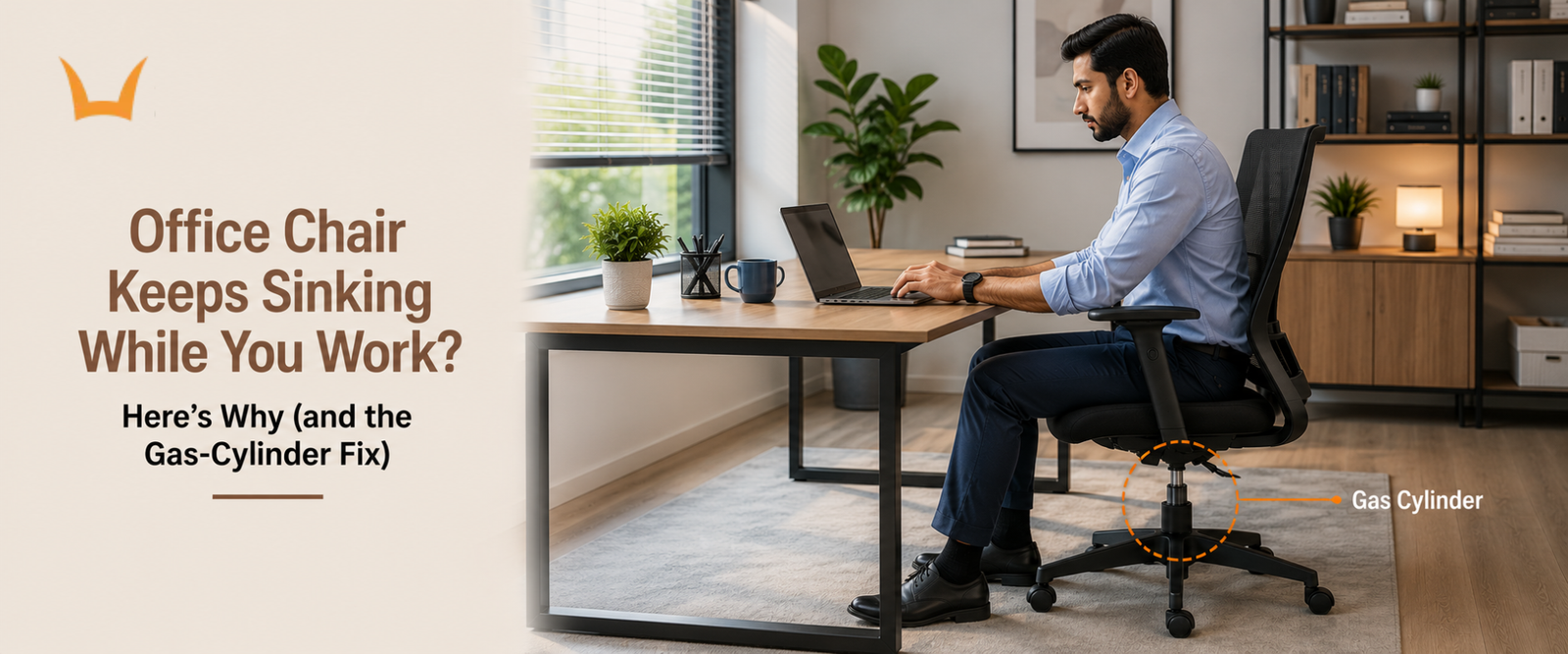
Office Chair Keeps Sinking While You Work? Here's Why (and the Gas-Cylinder Fix)
- The Part That Fails: The Gas Cylinder
- How to Diagnose a Sinking Office Chair
- How to Stop an Office Chair from Sinking
- What Sinking Chairs Mean for a Whole Office
- How to Buy Seating That Holds Its Height
- Frequently Asked Questions
Quick Summary
An office chair that slowly drops while you sit is nearly always caused by a gas cylinder that has lost pressure. It is not a broken chair. Once you can tell a worn cylinder from a loose lever, the fix is simple. And choosing the right cylinder at the time of purchase stops the problem across a whole office.
Have you ever sat down at your desk, only to feel the seat slowly drop under you? You pull the lever, raise it back up, and a little later it sinks again. It is a small thing, but it breaks your focus and spoils your posture. In an office, it rarely stops at one chair.
When an office chair keeps sinking, the reason is one small part under the seat. As a company that builds and tests commercial seating for offices, hospitals and busy public spaces, we know exactly what causes it and how to prevent it. This guide explains why it happens, how to check what is wrong, and how to buy chairs that hold their height for years.
The part that fails: the gas cylinder
Almost every adjustable office chair sits on a gas lift. This is a sealed metal cylinder filled with pressurised gas. When you lift the lever under the seat, a valve opens and the gas moves the seat up or down. When you let go, the valve shuts and holds the height.
This cylinder works hard. It carries your full weight, takes the shock each time you sit, and holds one position for hours.
Over months and years, the seals inside it wear out. Dust and daily use let the gas slowly leak past these seals. Once that happens, the cylinder can no longer hold pressure, and the seat starts to sink even though nothing looks broken.
Two habits make it worse. Sitting a chair over its weight limit, and dropping down hard into the seat, both wear the seals faster. In offices where many people share the same chair, such as hot desks, the cylinder does even more work.
How to Diagnose a Sinking Office Chair
Before you change any part, find out what is really failing. A leaking cylinder and a loose lever both feel the same, but they need different fixes.
The mark test
Raise the chair to its highest setting. Stick a small piece of tape or make a light pencil mark on the shiny metal tube of the cylinder. Now sit down and work for a minute without touching the lever.
If the seat slides down and the tube drops below your mark, the gas cylinder is leaking. This is the most common result, and it means the cylinder needs replacing.
When it is the lever, not the cylinder
Sometimes the cylinder is fine and the lever is the problem. If the lever or its link sits too close to the valve pin, it can hold the valve slightly open. The chair then sinks as if it were leaking.
Watch what happens when you lean. If the seat only drops when you recline, or when your leg touches the lever, check the lever and tilt parts first. Tightening the loose screws under the seat can restore a firm lock. If your office chair makes noise when you lean, worn or dry tilt parts may be responsible, which is a separate issue from the sinking itself.
When a new office chair keeps sinking
A new chair that will not hold height is annoying, but it is usually not a worn seal. On a new chair, sinking often comes from a lever resting on the valve pin, a cylinder too weak for the user's weight, or a lift that was not fitted properly during assembly.
First, check that the lever springs back fully and the seat is bolted on straight. If it still will not lock, call the supplier's support team, because a new chair should be checked, not modified.
How to stop an office chair from sinking
There are two kinds of fix. A quick hold that stops the drop today, and a proper repair that brings the chair fully back to normal.
Quick holds
If you need the chair working this afternoon, you can lock it at one height. Tighten a metal hose clamp around the cylinder tube, or cut a length of PVC pipe, split it down the side, and clip it over the tube. Both act as a block, so the seat cannot fall below that point.
These are short-term fixes only. They lock the chair at one height, so you lose the ability to adjust it, and they slip over time and need tightening again. In a shared office, where people of different heights use the same chair, a fixed height does not work for long.
The proper fix: change the gas cylinder
The real answer to a leaking cylinder is a new one. Most gas lifts use the same taper fitting, so a correctly sized cylinder fits most chairs. The job needs only basic tools and some care, because the part is under pressure.
Two things matter when you pick the new cylinder. Match its length and width to your chair, and choose a class rated for the user's weight and daily hours. A higher class of gas lift is made for heavier loads and longer use, so it holds height better over time.
What sinking chairs mean for a whole office
One sinking chair is a small bother. Many of them across an office, a training hall, or a waiting area point to a bigger buying issue.
When lots of chairs start dropping at the same time, it usually means they were built with a gas lift too weak for how the space is used. Heavy footfall, long sitting hours, and shared use all push the cylinder harder than a home chair ever faces.
This is why the buying choice matters more than any repair. Chairs made for real commercial use do not reach this point as fast. Our team supplies this kind of seating to offices, colleges, hospitals, and large projects, where a full floor of chairs must last for years.
How to buy seating that holds its height
You can avoid the sinking problem before it starts, with a few checks at the time of buying.
Match the gas lift class to the user's weight and the hours the chair will be used, not to a rough average. Check that the chair is built and tested to proper durability standards, because a tested cylinder and frame behave very differently from an untested one. Syona chairs are made in line with international BIFMA standards at our plant in Coimbatore, Tamil Nadu.
For long working hours, good weight support, back height, and a reliable height-adjustment mechanism are just as important as overall comfort. Choosing the right chair from the start can help prevent many common adjustment problems.
Busy public areas need their own thought. Lobbies and clinics do better with seating made for busy waiting areas, while front desks are served well by reception and visitor chair options that take heavy, mixed use every day.
In short
Most sinking chairs aren't broken, they're just due for a new cylinder — a five-minute check and a like-for-like swap solves it in nearly every case. The one thing worth doing differently next time is buying with the lift class matched to who'll actually use the chair and for how long. That single choice at purchase is what decides whether you're back here again in eight months or not for another seven years.
If chairs in your workplace keep dropping, our team can help you choose commercial seating with the right specifications for your environment. Get in touch to discuss your requirements, and we'll help you find a reliable solution that works from day one.
Frequently asked questions
Do all office chairs use the same size gas cylinder?
No. Cylinders vary by diameter and stroke length across brands and models. Take the old one out and match it in person, or check the model number, rather than ordering by weight rating alone.
Is a sinking office chair dangerous?
A slow sink is mainly a comfort and posture problem, not an urgent danger. But if you see a sudden drop, hear odd noises, or notice damage or wobble, stop using the chair until it is checked, because the cylinder holds pressure.
How long does an office chair gas cylinder last?
There is no single number, as it depends on load and use. A cylinder near its weight limit, taking hard knocks, or used all day by many people wears sooner. A well matched and well kept lift lasts much longer.
Is Your Office Seating Built for Daily Use?
Recurring chair problems can be costly across a busy workplace. Syona Roots manufactures and supplies office chairs designed for regular use, with durable frames, reliable gas lifts and practical features for demanding environments. Explore our office seating range for workspaces and office visitor chairs for reception areas.