


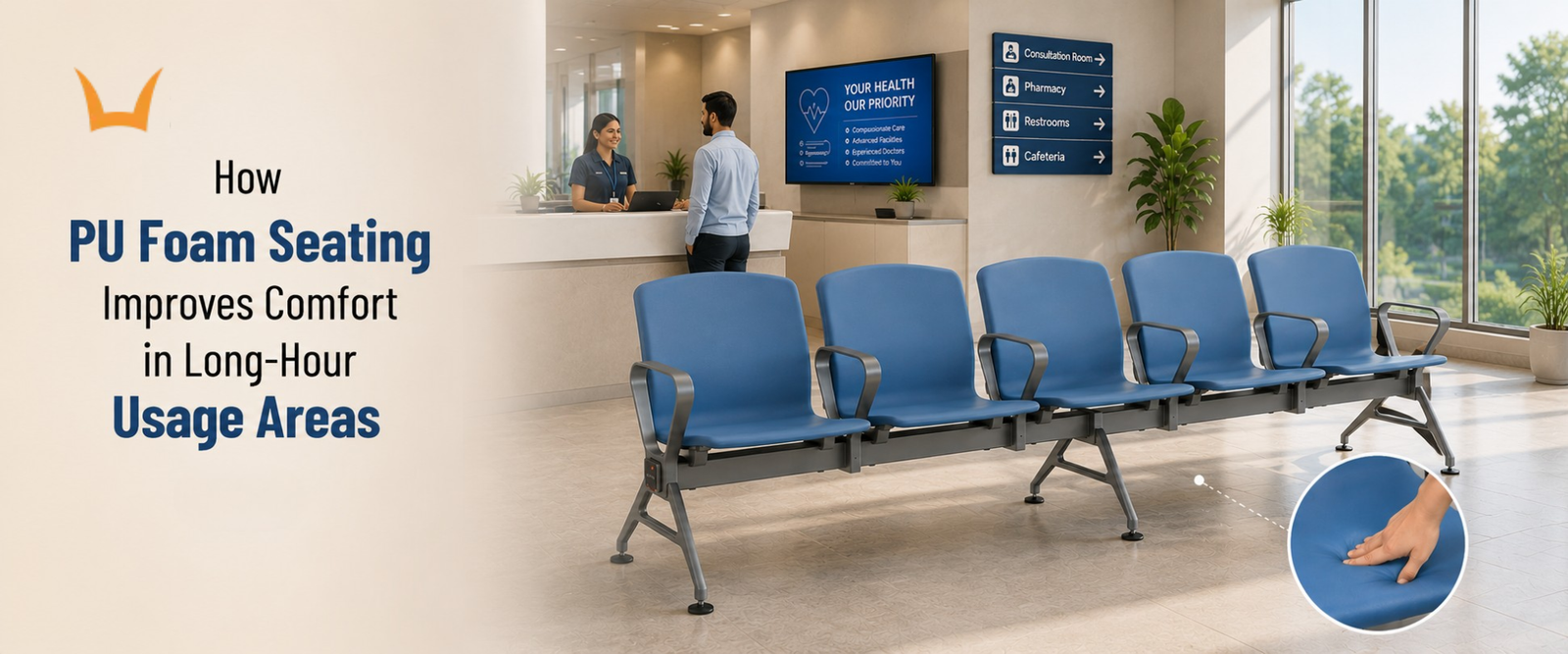
How PU Foam Seating Improves Comfort in Long-Hour Usage Areas
- Why Long-Hour Waiting Areas Need Better Seating Than Hard Plastic
- The Three Comfort Benefits PU Foam Delivers in Public Seating
- Pressure Distribution Across the Sitting Body
- Natural Body Conformity Without Sinking
- Lasting Resilience That Does Not Flatten Over Time
- How the Self-Skinned Surface Keeps the Comfort Feel Consistent
- How the Steel Insert Protects the Comfort Shape Over Years
TLDR
- Long waits need real cushioning, not hard plastic
- PU foam distributes pressure across the body
- Good foam supports the back without sinking
- Premium foam keeps its comfort for years
- Skin and steel insert protect the comfort feel
Introduction
A patient waiting two hours for a doctor. A traveller stuck at the airport for a delayed flight. A family member waiting outside an operation theatre through the night. A corporate visitor sitting through a long pre-meeting wait.
These long waits happen every day across India. The cushioned waiting chair the person sits on during these waits decides whether the experience is bearable or exhausting.
At Syona Roots, one of India's waiting chair manufacturers, we manufacture two distinct waiting chair families. The Venus range with engineering polymer construction, and the Jupiter Awe range with self-skinned PU foam seats. This blog explains how PU foam seating comfort actually works, and why it matters for long-hour public spaces.
Why Long-Hour Waiting Areas Need Better Seating Than Hard Plastic
Hard plastic chairs work fine for short waits. A ten minute wait at a billing counter. A quick visit to the office reception. The body handles these short sits without strain.
Long waits are different. After thirty minutes on a hard surface, blood circulation in the lower body starts slowing. After an hour, the pressure points at the back of the thigh and the lower back start aching. After two hours, the user is shifting constantly, looking for any position that does not hurt.
This is where the chair material becomes a real factor in user experience. Hard polymer is right for short waits. PU foam is right when the wait routinely runs longer than thirty minutes.
The Three Comfort Benefits PU Foam Delivers in Public Seating
Pressure Distribution Across the Sitting Body
When the body weight rests on a small contact area, the pressure on those few square centimetres becomes intense within minutes. The sit bones and the back of the thighs carry most of the load. This is also why smooth seat edge design matters, as it helps reduce pressure at the front of the thighs. These concentration points become painful quickly.
PU foam compresses under body weight and spreads the load across a much larger surface. The same body weight is now supported by hundreds of square centimetres instead of just a few. This helps improve comfort and reduce pressure-related discomfort during extended sitting periods.
Natural Body Conformity Without Sinking
Good PU foam compresses just enough to follow the natural curve of the body, but not so much that the user sinks into the seat. The lower back stays supported. The thighs rest at a comfortable angle. The hips do not roll backward into a slouched position.
Cheap foam fails this test. It either compresses too much, creating a hammock effect that strains the back, or too little, behaving almost as a flat surface. The right PU foam holds the middle ground between cushioning and support.
Lasting Resilience That Does Not Flatten Over Time
This is where foam quality separates premium from cheap. Low-grade foam compresses permanently after a few months of regular use. The seat starts looking sunken. The comfort disappears within the first year.
High-resilience PU foam bounces back to its original shape after every sit. Even after thousands of users across years of use, the foam holds its form. The seat that felt right on day one feels just as right on day eight hundred.
How the Self-Skinned Surface Keeps the Comfort Feel Consistent
The surface of a PU foam seat is what the user actually feels. The material right under their thighs and back. This surface decides whether the comfort feels good or compromised.
Most cheap PU foam waiting chairs use a separate fabric or leatherette cover stretched over the foam. The cover wears out within months. It tears at seams. It absorbs sweat and stains. Once the cover deteriorates, the user feels rough seams, sticky patches, and uneven surfaces against their body. The comfort is compromised before the foam itself has even started failing.
Self-skinned PU foam works differently. During the moulding process, the outer layer of the foam forms a denser, tougher skin. This skin is the seat surface itself. No separate cover. No seams. No fabric to stain.
This makes the comfort feel consistent across years of use. The seat is designed to maintain a consistent feel over years of regular use. The skin also resists liquids and cleaning chemicals, which means daily cleaning never degrades the surface feel. In healthcare environments, this hygienic surface is a real benefit on top of the comfort. Alongside thoughtful privacy considerations in waiting areas, it helps create a more reassuring patient experience.
The Jupiter Awe range uses self-skinned PU foam precisely so the comfort the user feels on day one is the same comfort they feel for years afterwards.
How the Steel Insert Protects the Comfort Shape Over Years
The other threat to long-term foam comfort is structural. Even premium foam needs internal support to keep its shape under the demands of public seating.
Without internal reinforcement, the foam absorbs the full weight of every user directly. Over hundreds of sittings, the foam edges start sagging. The seat shape drifts away from its original ergonomic curve. The comfort designed into the chair fades.
The Jupiter Awe range solves this by moulding a steel insert inside the foam during manufacturing. The steel insert reinforces the foam from within. It carries the structural weight of the user, while the foam handles only the cushioning work it was designed for.
The result is that the foam stays in its intended shape across years of daily public use. The pressure distribution stays even. The body conformity stays accurate. The resilience stays high. The comfort the chair was built to deliver stays intact.
Conclusion
PU foam seating comfort is not just about how the chair feels in the showroom. It is about whether that comfort holds up across hundreds of thousands of long-hour sittings.
The right foam delivers the comfort benefits. The right surface keeps the comfort feel consistent. The right internal reinforcement preserves the comfort shape over time. When all three come together, the chair does its real job. It makes long waits bearable for the people who have to sit through them.
Need waiting chairs designed for extended seating comfort?
The Syona Roots Jupiter range, including the Jupiter Awe and Jupiter Ace models, is designed for environments where visitors spend extended periods seated. Featuring self-skinned PU foam seats with steel insert reinforcement, these waiting chairs provide lasting comfort, dependable support, and durability for hospitals, clinics, airports, corporate offices, and other high-traffic public spaces. Available in 2, 3, 4, and 5-seater configurations to suit different waiting area requirements.