


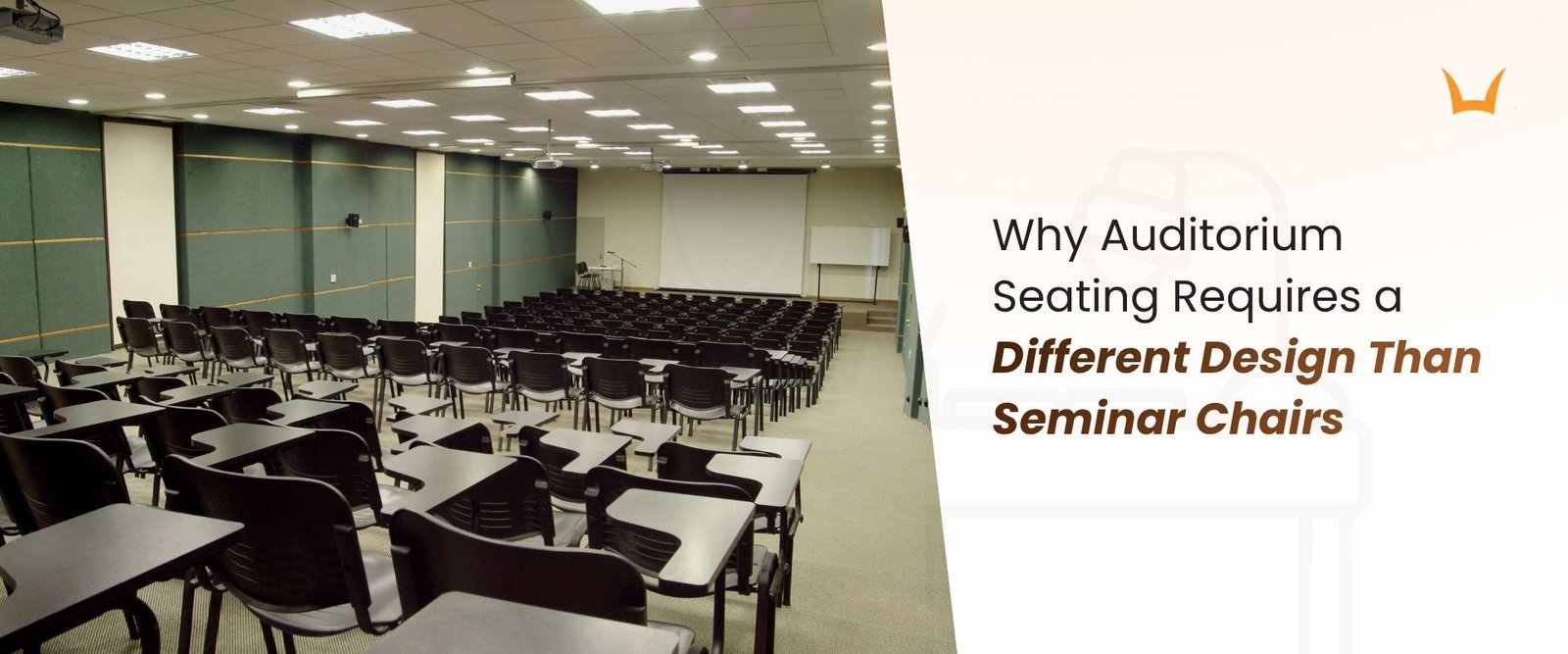
Why Auditorium Seating Requires a Different Design Than Seminar Chairs
- Two Rooms, Two Very Different Goals
- What Makes Auditorium Seating Unique
- Built for Permanence, Not Movement
- Tiered Layout for Clear Sightlines
- Acoustic Friendly Materials
- Recliner and Tip Up Mechanisms
- What Makes Seminar Chairs Different
- Designed for Note Taking and Laptops
- Flexibility for Layout Changes
- Lighter Frames for Easy Handling
- Why Mixing the Two Is a Costly Mistake
- How to Choose Based on the Room Purpose
TLDR
- Auditorium seating becomes part of the room
- Seminar chairs stay flexible and movable
- Sightlines and acoustics drive auditorium design
- Writing surfaces drive seminar design
- Wrong pick ruins the whole room
Introduction
An auditorium is built for performance. A seminar room is built for participation. The two spaces serve very different goals, and the seating inside them must follow that difference.
Yet many buyers treat the two as the same. They pick one chair and try to use it everywhere. The result is poor sightlines in auditoriums, restless attendees in seminars, and rooms that never fully work as planned.
This blog breaks down exactly why auditorium seating design is in a class of its own, and why seminar chairs follow a completely different rulebook.
Two Rooms, Two Very Different Goals
An auditorium hosts large audiences for ceremonies, lectures, performances, and screenings. The audience does not interact much. They watch, listen, and absorb. The room belongs to the stage.
A seminar room is the opposite. The audience interacts. They take notes. They use laptops. They turn to face one another for discussions. The room belongs to the participants.
This single difference shapes everything about the seating. The chair in an auditorium serves the audience as a viewer. The chair in a seminar serves the audience as a worker. Two roles. Two designs.
What Makes Auditorium Seating Unique
Built for Permanence, Not Movement
Auditorium chairs are part of the building. They are bolted to the floor. They follow the curve of the room. Once installed, they stay in place for decades.
This permanence is not a limitation. It is a feature. Fixed installation gives the room a clean, professional look and ensures every seat lines up with the next. The audience experience stays consistent from the front row to the very last seat.
Seminar chairs cannot offer this. They are built to move. That is exactly why they would never deliver the structured feel a true auditorium needs.
Tiered Layout for Clear Sightlines
The tiered seating design is one of the most powerful features of an auditorium. Each row sits slightly higher than the one in front. This elevation gives every viewer a clean line of sight to the stage.
Without proper tiering, attendees in back rows lose visibility. Heads block screens. Shoulders cover speakers. The whole experience falls apart. Auditorium chair design works hand in hand with this elevation. Seat heights, row spacing, and back curves are all tuned for tiered layouts.
This sightline-first thinking is something seminar chairs are simply not designed to handle. Schools and colleges that invest in institutional auditorium seating understand that sightlines and permanence are non-negotiable for large academic gatherings.
Acoustic Friendly Materials
Sound matters in an auditorium. Every word from the stage must travel cleanly to the last seat. Every musical note must arrive without distortion.
This is where acoustic friendly seating earns its place. Foam padding, fabric upholstery, and full backed chairs absorb sound waves the way human bodies do. So when the room is half empty, it still sounds the same as when it is full. The sound engineers who design these halls depend on this property.
Seminar chairs with hard plastic backs and minimal padding cannot do this job. They reflect sound rather than absorb it, which would ruin the acoustic balance of any serious auditorium.
Recliner and Tip Up Mechanisms
Many modern auditorium chairs come with built in tip up seats. When the user stands up, the seat folds back automatically. This frees up walking space in narrow rows and keeps aisles clear.
Recliner auditorium chairs go a step further. They allow the audience to lean back during long screenings, ceremonies, and performances. The added comfort makes longer events feel shorter.
These mechanisms are engineered into the chair frame itself. Seminar chairs do not need them. Auditorium chairs cannot work without them.
What Makes Seminar Chairs Different
Designed for Note Taking and Laptops
Seminar chairs come with writing pads or tablet arms because the audience actually works during the session. Notes get taken. Laptops get used. Handouts get filled in.
The chair becomes a small workstation. The pad is positioned at the right height. The arm folds in and out. The user can type, write, and reference materials without losing focus.
This entire design feature would be useless in an auditorium where audiences only watch.
Flexibility for Layout Changes
A seminar room often hosts different formats through the day. A morning lecture may switch to an afternoon group discussion. The same room may shift from theatre style to U shape and back.
Seminar chairs support this flexibility. They can be moved, regrouped, and rearranged in minutes. The chair adapts to the format of the session.
Auditorium chairs cannot do this. Once they are bolted down, the layout is fixed for life.
Lighter Frames for Easy Handling
Seminar chairs are built lighter on purpose. Staff need to set up and reset rooms quickly. Heavy chairs slow the process and tire workers.
Light yet strong frames are the seminar chair standard. Stackable and foldable variants take this further by making storage easier, though stackable chairs for seminar halls may not support long session comfort and stability.
Auditorium chairs go the opposite way. They are built heavy and solid because they never need to be moved. Their weight contributes to their stability, durability, and acoustic performance.
Why Mixing the Two Is a Costly Mistake
Buyers sometimes try to save money by using seminar chairs in auditorium spaces or vice versa. This always ends badly.
In an auditorium, lightweight seminar chairs lose the sightline advantage. The room loses its acoustic balance. The hall feels temporary instead of grand. The audience experience drops.
In a seminar room, heavy auditorium chairs kill flexibility. The space cannot reconfigure for workshops, group activities, or different formats. The room becomes locked into one use.
The wrong choice does not just look bad. It quietly limits what the space can do for years.
How to Choose Based on the Room Purpose
The rule is simple. Match the seating to the room goal.
If the space hosts large audiences who mainly watch and listen, go for fixed auditorium seating with proper tiered design, acoustic friendly upholstery, and tip up or recliner mechanisms.
If the space hosts working groups who take notes, use laptops, and shift between formats, go for seminar chairs with writing pads, light frames, and flexible layouts.
If the space hosts both, plan two separate rooms. Trying to make one chair do both jobs is the slowest, most expensive way to fail.
Conclusion
Auditorium seating and seminar chairs share a common purpose at the surface but follow very different design rules underneath. One is built into the room. The other adapts to it. One serves audiences who watch. The other serves participants who work.
Knowing this difference is the first step to building a space that truly delivers on its purpose. The right chair turns a good hall into a great experience. The wrong chair quietly holds the whole room back, especially when poor auditorium seating affects comfort, visibility, and audience focus during events.
Planning a new auditorium or upgrading an existing one?
Choose auditorium seating designed for comfort, durability, acoustics, and clear audience sightlines with Syona. The right seating transforms how people experience performances, lectures, and events while helping the venue maintain a professional and organised atmosphere for years to come. Because forcing seminar chairs to behave like auditorium seating is basically furniture identity confusion with a budget spreadsheet attached.