


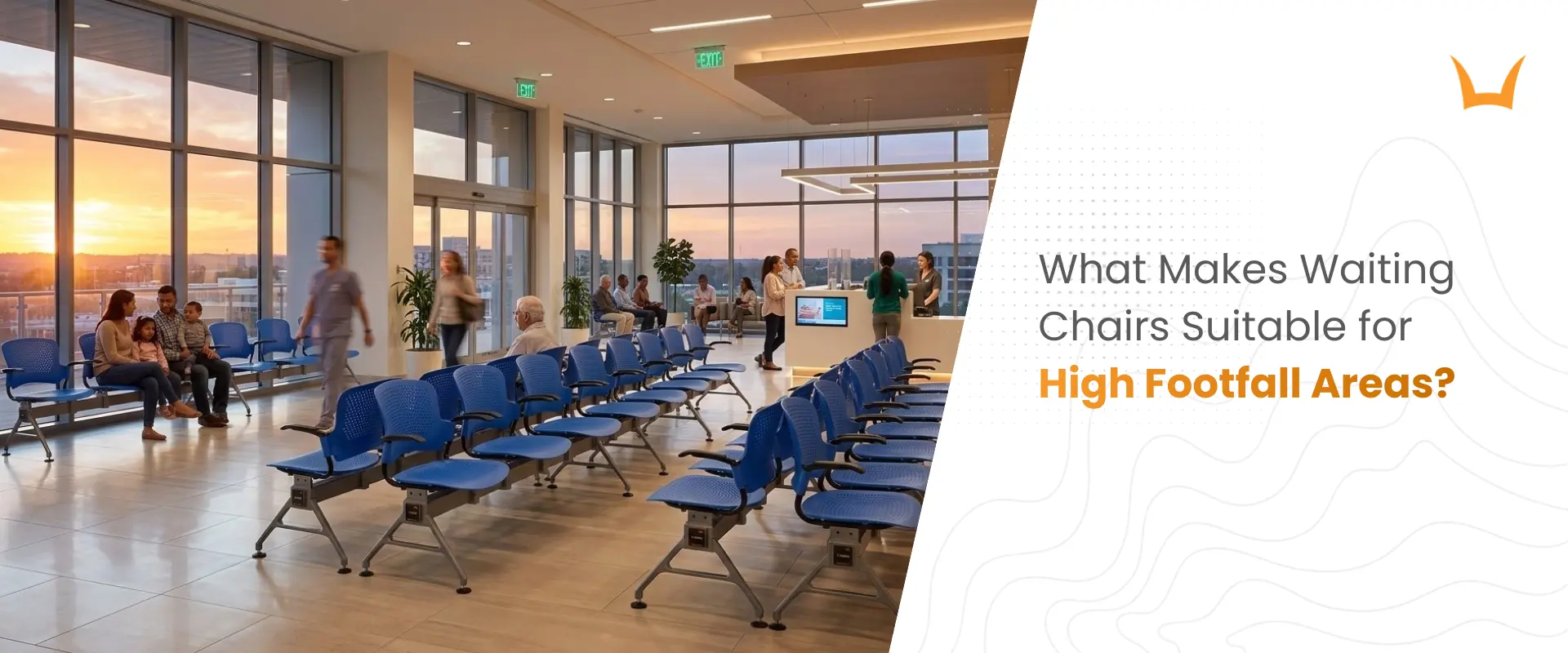
Most buyers choose waiting chairs by how solid they look on a showroom floor. In high-footfall areas that test misses what wears seating out: joints that loosen under constant use, seat surfaces that are wiped down again and again, and seating that gets pushed out of line once the hall is full. Syona's waiting range is made up of 12 linked products across Venus Gang, Jupiter Awe and Jupiter Ace Mid Back, and the sections below use them as examples. This guide is written for facility managers, procurement teams, architects and operations heads who are specifying seating for a station, hospital, office or public building. It explains what a busy space asks of a frame, a seat and a row, and how those choices show up in cost over the years.
What Is a High Footfall Area?
A high footfall area is a space where people arrive in a steady stream through the working day, sit for a while and leave, so each seat is used by many different visitors between one clean and the next. For a buyer, the high footfall meaning that matters is constant turnover, not a large crowd on a single occasion. Syona's gang seating is made for these places: airports, railway stations, public offices, theatres, multiplex malls, schools and colleges, as well as the lobby or reception area of a commercial building. Hospitals belong on the list too: their waiting halls rarely empty, and seating from specialist hospital chair manufacturers is built with that in mind. Because every one of these settings runs on turnover, footfall belongs in the specification itself: choosing a chair for a high footfall space starts with an expected number of visitors, written down before anyone compares models or colours.
Frames and Armrests That Hold Up in High Footfall Areas
Durability under heavy daily use depends on the legs and armrests carrying the load together, so no small joint takes the strain on its own. On Venus Gang and Jupiter Awe, the legs and armrests are made from pressure die cast aluminium and PBT, short for polybutylene terephthalate. The aluminium parts are formed by die casting, and Syona describes the Jupiter Awe build as having very high load carrying capacity, strength and wear resistance.
Joints are where cheaper seating gives way first. Every person who drops into a seat or pushes off an armrest twists the joint slightly, and in a busy hall that twist is repeated with every visitor. A joint that has started to loosen becomes a safety concern long before it breaks.
Armrests also do a second job, one that matters for accessibility. An older visitor, a parent holding a child or anyone recovering from an illness uses the armrest as a handle to lower themselves down and push back up. It has to stay firm under that sideways push as well as under a person's weight.
Easy to Clean Waiting Chairs Start With the Seat Surface
The Venus Gang seat and the Jupiter Awe 3 seater seat are moulded in engineering polymer, a smooth surface that comes clean with a damp cloth and a little liquid soap, which keeps hygiene a quick daily job. Syona's care notes rule out scrub pads and chemicals, since both can scratch the seat, and advise keeping the chairs out of direct sunlight and extreme weather. With nothing upholstered on top, a spilled drink wipes away instead of soaking in, and there is no cover to stain or hold the smell of a long day.
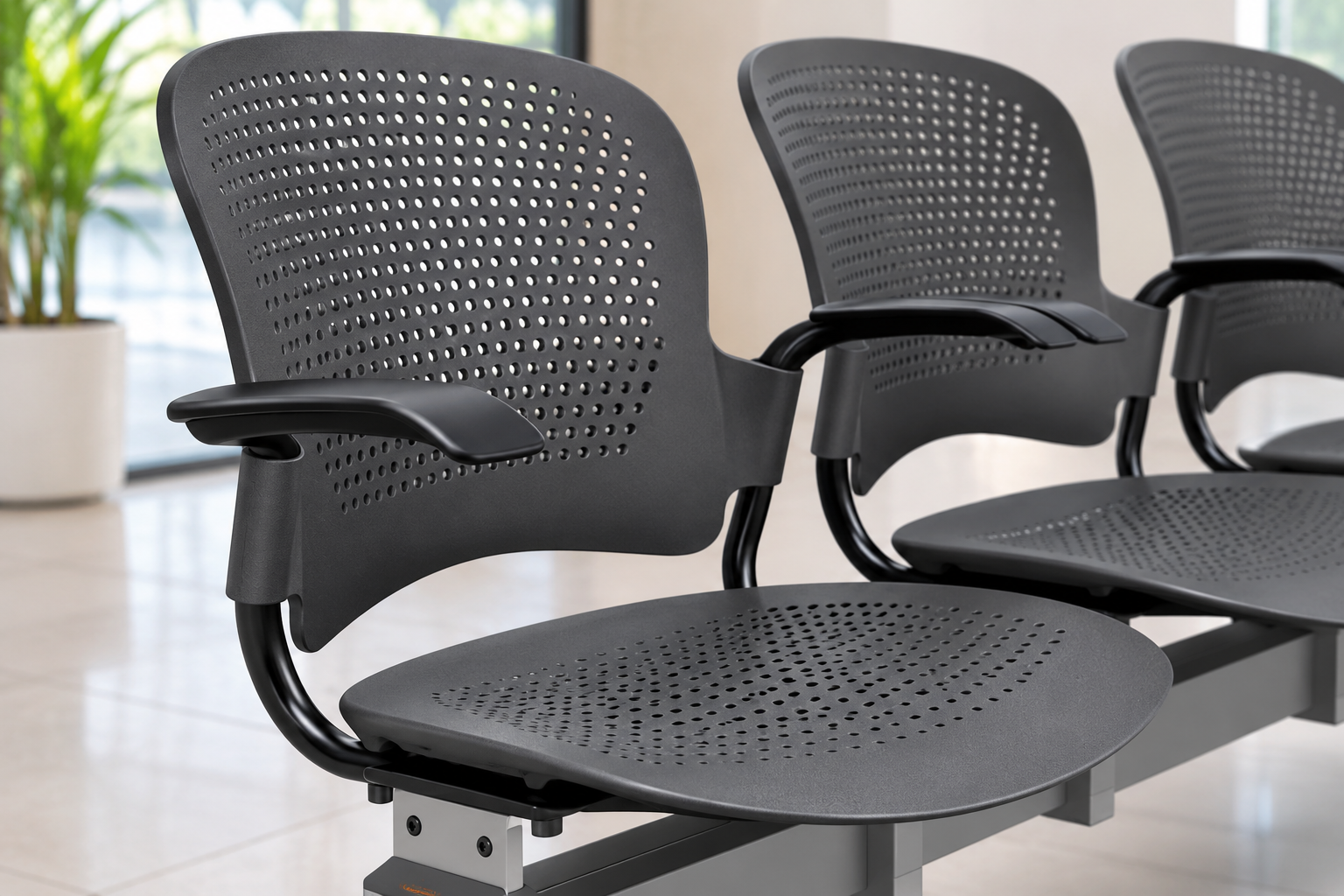
Comfort comes from the same moulding. Venus Gang seats are shaped for comfort and carry perforations placed to let air through in tropical conditions, so a visitor sitting through a delayed train or a long outpatient queue is not left on a hot, sticky surface.
How Linked Seating Stays Level, Aligned and Quiet
Linked seating stays in place because several seats share one frame, which makes the row too long and too heavy to be nudged out of line the way a single chair is. Loose chairs drift through the day. Visitors pull them closer to a friend, turn them towards a counter or push them back to make room for luggage, and by evening the walkways planned around them have narrowed. Rows that stay where they were set keep those paths clear, which is the point where waiting chair layout and patient flow start to depend on the seating itself.
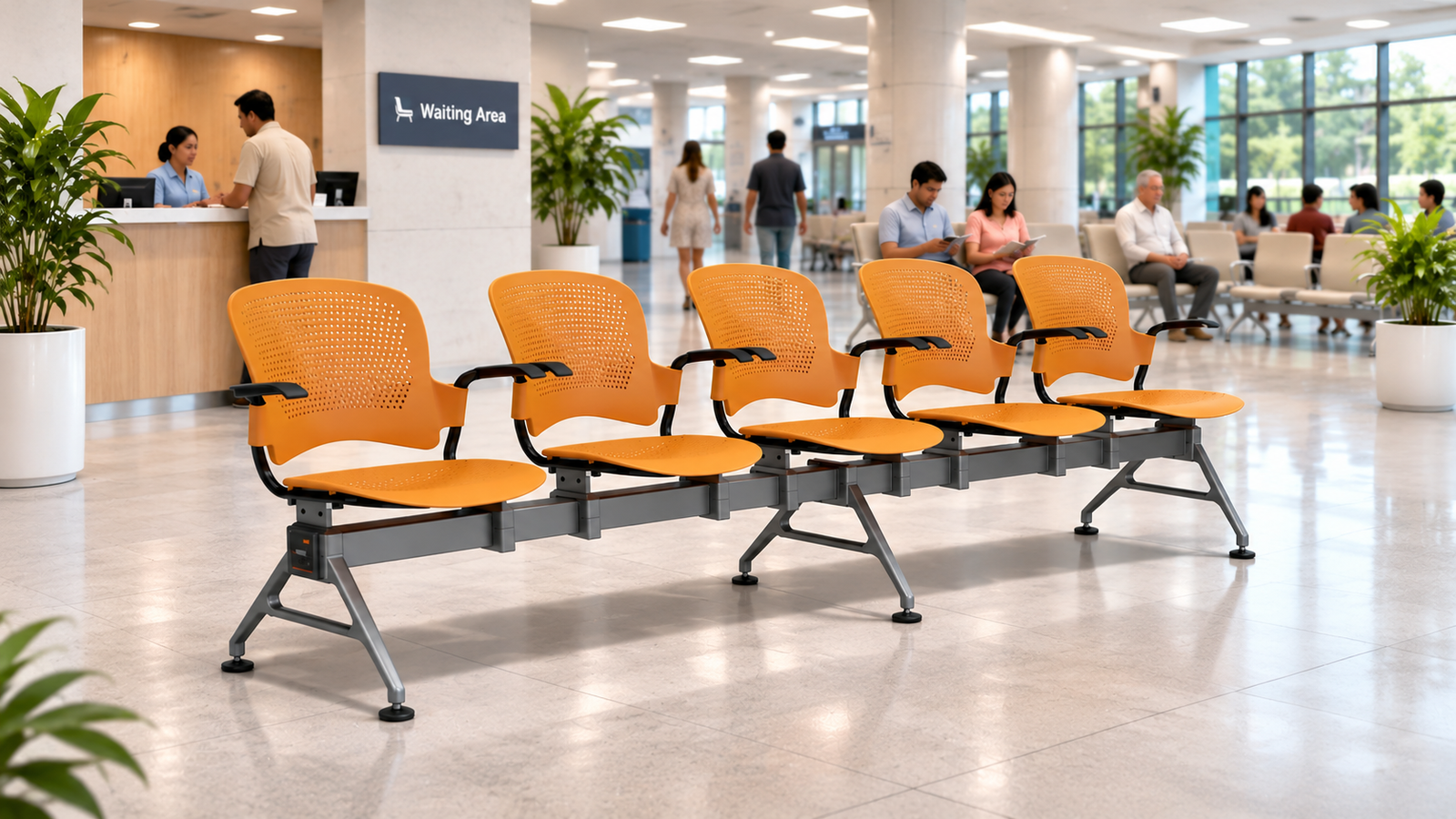
Take a railway station waiting hall that seats 30 people. Six Jupiter Ace Mid Back 5 seater rows fill it. Each row measures 2,916 mm and weighs 66.5 kg, so together they run to about 17.5 m of seating, and the staff have six units to place once rather than 30 chairs to straighten every evening. Because nobody drags a row that heavy across the floor, the hall also stays free of the scraping noise loose chairs make at peak times. On slightly uneven floors, Jupiter Awe is the row to specify: its frame carries level adjusters that keep it steady.
Commercial Seating and the Real Cost of Cheap Chairs
Low-cost chairs cost more over time because they fail one by one and get replaced in small, unplanned batches, each one bought, delivered and fitted while the area is still in use. Commercial seating costs more at the start for a plain reason: heavier sections, stronger joints and materials chosen for heavy use all go into the build. The difference is paid back in fewer repairs, fewer complaints from staff and fewer rows taken out of service.
Warranty length is one number a buyer can compare between suppliers on equal terms. Syona covers Venus Gang for 7 years and both Jupiter Awe and Jupiter Ace Mid Back for 4.
Some costs never appear on an invoice. A visitor forms an opinion of an organisation in the minutes spent waiting, and a cracked seat or a row that rocks suggests a place that is not well looked after. An even, clean row in a colour that suits the interior tells them the opposite before anyone at the counter has said a word. For a bank, a clinic or a government office, that impression is part of the service.
Syona Waiting Chairs for High Footfall Environments
Every Syona waiting model comes in all four row lengths, so a single hall can mix row lengths around doors and pillars and still keep one consistent look. Venus Gang can be ordered with or without a side table, which gives visitors somewhere to rest a bag or a file instead of using the next seat. On the commercial side, Syona's gang chairs are described as easy to install and needing minimal maintenance, and the Venus Prime and Venus Pride visitor chairs complete the set for a reception desk. Comparing build, care and warranty detail at this level is what separates reliable waiting chair manufacturers from catalogues that list only a price.
Planning a Better Waiting Area?
See Syona's full range of linked waiting chairs for hospitals, offices, airports and public spaces, or share your seat count with our team to find the rows that fit.